
Worauf es bei Stillkissen ankommt – von Materialien und Formen bis zur richtigen Anwendung in Schwangerschaft und Stillzeit.
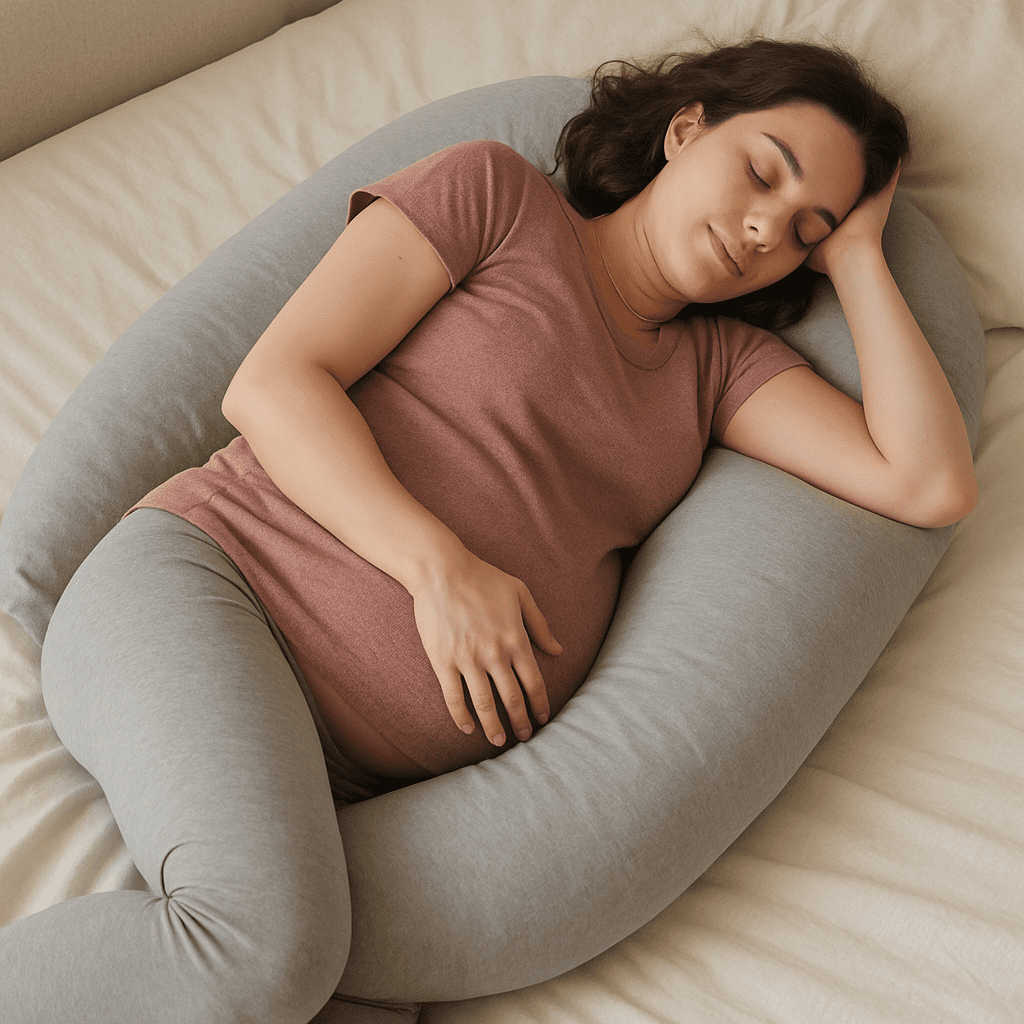
When should you buy a nursing pillow?
Viele werdende Mütter fragen sich, wann der richtige Zeitpunkt ist. Sinnvoll ist ein Kauf bereits im zweiten Trimester.
Der Name „Stillkissen“ ist etwas irreführend, denn das Kissen leistet schon lange vor der Geburt gute Dienste. Ab dem vierten oder fünften Monat wächst der Bauch spürbar, Bänder dehnen sich, das Gewicht verlagert sich – und die gewohnte Schlafposition wird zunehmend unbequem.
Vorteile eines frühen Kaufs:
- Better sleep quality Das Kissen stützt Bauch und Beine und reduziert unruhiges Hin- und Herwälzen.
- Längere Nutzungsdauer: Je früher der Kauf, desto länger der Nutzen.
- Habituation effect Wer sich schon in der Schwangerschaft an das Kissen gewöhnt, kommt nach der Geburt beim Anlegen leichter damit zurecht.
Sleeping with a nursing pillow during pregnancy
Mediziner und Hebammen empfehlen Schwangeren ab der zweiten Schwangerschaftshälfte, bevorzugt auf der linken Seite zu schlafen, um das Vena-Cava-Kompressionssyndrom zu vermeiden. Diese Position fördert die Durchblutung der Plazenta und entlastet die inneren Organe.
Doch die Seitenlage belastet auf Dauer Becken und Wirbelsäule. Ein langes Stillkissen hilft: Das obere Ende kommt unter den Kopf, der Mittelteil unter den Bauch, das untere Ende zwischen Knie und Knöchel.
Which nursing pillow is suitable for side sleepers?
Geeignet sind lange, flexible Kissen in C- oder U-Form mit 170 bis 190 cm Länge. Ein U-förmiges Kissen stützt zusätzlich den Rücken, sodass es beim nächtlichen Umdrehen nicht mitgenommen werden muss.
Rückenschmerzen in der Schwangerschaft
Das Gewicht des Bauches zieht die Lendenwirbelsäule oft ins Hohlkreuz. Ein Kissen, das nachts eine aufgerichtete Haltung unterstützt, kann Verspannungen reduzieren. Tagsüber lässt es sich auch als Stütze im unteren Rücken nutzen, etwa beim Sitzen auf dem Sofa.

Worauf kommt es beim Kauf an?
Die Auswahl ist groß. Ein gutes Kissen sollte bei Füllung, Ergonomie, Schadstofffreiheit und Pflegeleichtigkeit überzeugen.
Die wichtigsten Kaufkriterien:
- Filling material: Bestimmt Gewicht, Anpassungsfähigkeit und Geräuschentwicklung.
- Shape and size: Muss zum Einsatzzweck passen – reines Stillen oder auch Schlafen.
- Reference material: Skin-friendliness, breathability, and ecological standards.
- Washability Im Alltag mit Baby unverzichtbar.
- Verarbeitung: Reißverschlüsse sollten verdeckt sein, Nähte auch starker Beanspruchung standhalten.
Füllmaterialien im Vergleich
Die Füllung entscheidet darüber, wie gut das Kissen stützt, wie warm es wird und wie laut es raschelt.
EPS-Perlen vs. Polyesterfasern
Die beiden häufigsten Materialien sind EPS-Perlen (expandiertes Polystyrol) und Polyester-Hohlfasern.
EPS beads (microbeads): Winzige Kunststoffkügelchen, oft 0,5 bis 1,5 mm groß.
- Advantages: Passen sich dem Körper gut an, bieten hohe Stützkraft, sind leicht und speichern Wärme.
- Disadvantages: Günstige Makroperlen können mit der Zeit an Volumen verlieren und müssen nachgefüllt werden.
Polyesterfasern (silikonisierte Hohlfasern): Ähnlich wie ein klassisches Kopfkissen.
- Advantages: Geräuschlos, vollständig maschinenwaschbar, weiches Liegegefühl.
- Disadvantages: Geringere Stützkraft – das Baby sinkt etwas tiefer ein, das Kissen muss öfter aufgeschüttelt werden.
Geräuscharme Füllung
Babys schlafen beim Trinken oft an der Brust ein. Lautes Rascheln beim Ablegen kann sie wecken. Wer EPS wählt, sollte auf Microbeads unter 1 mm Durchmesser achten – diese sind deutlich leiser. Natürliche Füllungen wie Dinkelspreu oder Buchweizenschalen sind vergleichsweise laut und schwer, bieten aber ein gutes Schlafklima.

Shapes and Sizes: Which Model Is Right for Me?
Choosing the right shape depends primarily on what you plan to use the pillow for and how much space you have in your bed or on your sofa.
Stillmond or classic nursing pillow?
The Decision Nursing pillow or classic nursing pillow depends heavily on lifestyle.
- The classic, asymmetrical, or C-shaped pillow: Measuring 170 to 190 cm in length (external dimensions), this is the ultimate all-rounder. It’s perfect for use during pregnancy as a side-sleeping pillow and can later be draped around the mother’s body like a nest. It offers maximum flexibility, but it also takes up a lot of space in bed.
- The Waning Moon (or Boomerang): These pillows are usually only 130 to 140 cm long and sewn into a firm, crescent shape. They are more compact and easier to handle, making them ideal for travel or when you really only used for breastfeeding and feeding on the sofa. Because they are short, they are often not long enough for tall women to sleep in during pregnancy.
Ideal length for a double nursing pillow
Mothers of twins face the unique challenge of often wanting to breastfeed two babies at the same time (tandem breastfeeding). This saves a tremendous amount of time. The Ideal length for a double nursing pillow is at least 190 cm, even better are special U-shaped twin pillows that are cut wider in the front. These pillows fit snugly around the waist and offer a large, flat resting surface on the left and right, where both babies can rest safely at chest height without rolling off.
Health, Ergonomics, and Sustainability
A nursing pillow is in direct contact with the sensitive skin of the baby and mother for many hours a day. Therefore, health aspects play a paramount role in any reputable purchasing guide.
Ergonomic design to relieve strain on the back and neck
Breastfeeding often takes 30 to 45 minutes per feeding at first—and this can happen up to 10–12 times a day. If you hunch your shoulders or lean forward over the baby while doing this, you’ll quickly experience severe neck and shoulder tension. A ergonomic shape for back and neck relief is characterized by the fact that the pillow lifts the baby exactly to the height of the mother’s chest. The mother should be able to sit upright and relaxed while the pillow supports the baby’s entire weight. A firmer pillow (e.g., filled with EPS beads) prevents the baby from sinking down during feeding.
Pollutant-tested nursing pillows with OEKO-TEX certificate
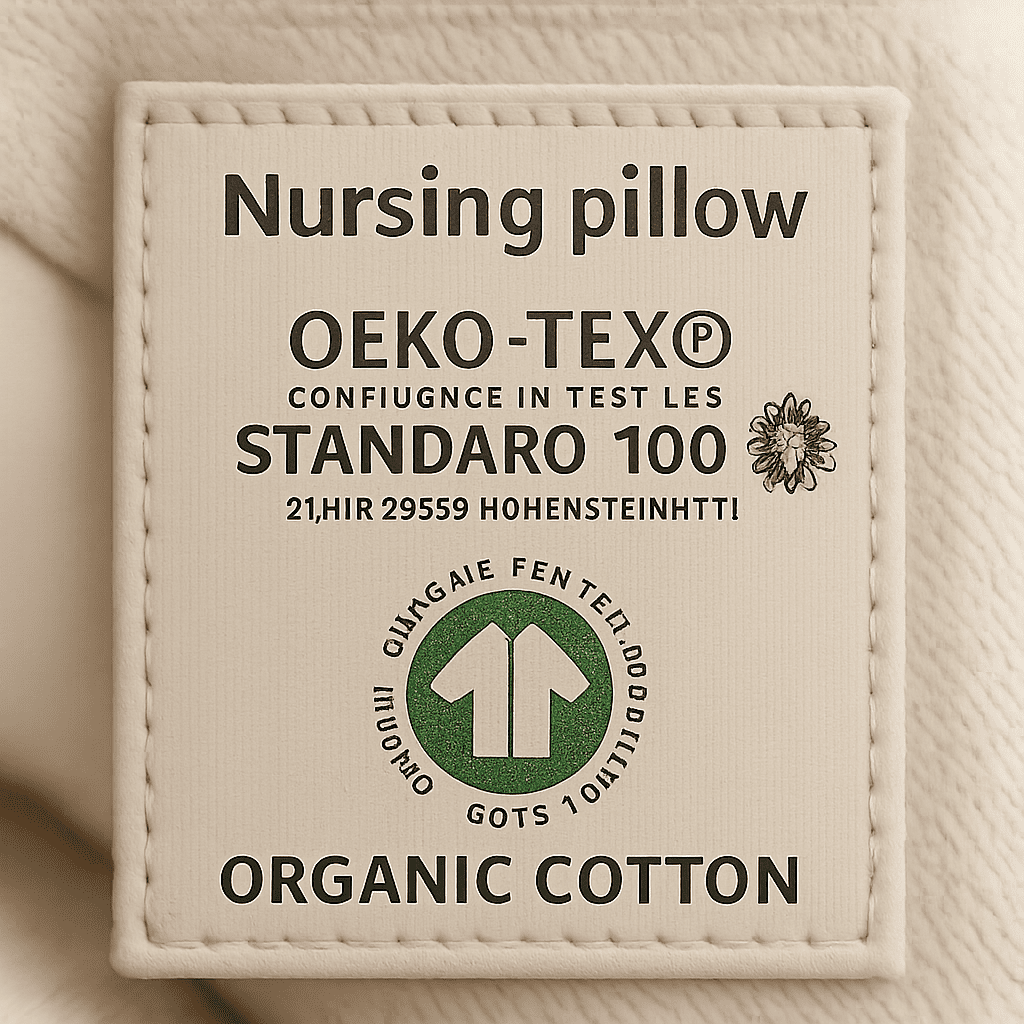
Since babies might suck on the pillow or rest their faces on it, it is essential that it be completely free of harmful substances. Be sure to check for Pollutant-tested nursing pillows with Öko-Tex certificate (OEKO-TEX Standard 100, ideally Product Class 1 for babies). This guarantees that all components—from the cover and inner lining to the zipper and filling—have been tested for harmful substances.
This is particularly important with EPS beads, as low-quality polystyrene can have an unpleasant chemical odor and release volatile compounds. Reputable manufacturers subject their beads to a special Toxproof process certified by TÜV to prevent this.
Sustainable nursing pillows made from organic cotton
More and more parents are valuing ecological responsibility. Sustainable nursing pillows made from organic cotton (often certified under GOTS – Global Organic Textile Standard) not only protect the environment by avoiding the use of pesticides and synthetic fertilizers, but are also especially gentle on a baby’s delicate skin. Organic cotton is breathable, which reduces excessive sweating in both mother and child during breastfeeding. There are also sustainable alternatives for fillings, such as natural latex flakes or millet husks, which are completely biodegradable.
Practical Tips: How to Get the Most Out of Your Nursing Pillow
A pillow is only as good as the way it’s used. In the first few days after giving birth, many new mothers are unsure how to properly manage what is often a bulky pillow.
How to position a nursing pillow correctly for different positions
Breastfeeding should always start with your own comfort. First, sit down in a relaxed position, place the pillow, and only then pick up the baby. Here are some instructions on how to How to position a nursing pillow correctly for different positions:
- The cradle hold (the classic position): Place the pillow in a U-shape around your belly so that the ends rest behind your back and provide support. The baby lies across your stomach on the pillow. The baby’s head rests in the crook of your arm, and the baby’s stomach faces your stomach (stomach-to-stomach). The pillow supports the weight of your arms and the baby.
- The back grip (football grip): Particularly recommended after a Cesarean section, as no pressure is exerted on the scar. Place the pillow beside you on its side. The baby lies with its body next to you on the pillow, its legs pointing towards your back. You support its neck with your hand. The pillow elevates the baby to chest level.
- Side-lying breastfeeding: Ideal for nighttime. You and the baby lie on your sides, belly to belly. Place the nursing pillow behind your back for support and to prevent rolling. Alternatively, you can place one end of the pillow between your knees to relieve pressure on your pelvis while the baby is nursing.
More than just breastfeeding: using nursing pillows as positioning aids for babies
When breastfeeding is over or breaks are needed, the pillow remains in constant use. You can Using nursing pillows as positioning pillows for babies.
- The baby nest Fold the pillow into a closed „O“ or „U“ shape. Place a soft blanket over it. This creates a safe, confined nest where the baby can rest during the day under supervision. The side support makes the baby feel secure, like in the womb.
- Tummy Time (Practicing a Prone Position): When the baby is a few months old, you can place them on their chest over the closed pillow. This makes it easier for them to lift their head and strengthens their neck and back muscles.
- Seat aid Once the baby starts to learn to sit up, the cushion can be placed in a U-shape behind the child's back. If they fall to the side or backward, they will land softly.
Caution Never let your baby sleep unsupervised in or on the nursing pillow, especially in the first few months of life. There is a risk of suffocation if the face slips into the soft crevice of the pillow.

Care and Hygiene in Baby's Daily Life
Whether breastfeeding or bottle-feeding, spills are inevitable from time to time. Breast milk, spit-up, or a leaky diaper make regular cleaning essential.
Wash and care for nursing pillow cover
When purchasing, be sure that the cover is removable with a zipper. For the Wash and care for nursing pillow cover To be able to do so, it should be machine washable at at least 104°F (40°C), ideally at 140°F (60°C). At 140°F (60°C), house dust mites and most bacteria are reliably killed.
Care tips:
- Replacement cover: Buy a second cover for it directly. Nothing is more annoying than having to take off your only pillow in the middle of the night and not having a replacement on hand.
- Wash inlet: The inner cushion should also be washable. Polyester fillings are easily washable. Cushions with EPS beads can often also be washed (usually up to 60°C). Important: Always pack the liner with pearl filling into a closed laundry bag! Should the zipper open in the washing machine or a seam burst, thousands of small micro-pearls will otherwise inevitably ruin your washing machine.
- Drying Do you prefer covers that are dryer-safe so you can get them ready for use again quickly? Pillows with fiber filling benefit from the dryer, as they get nice and fluffed up again there (feel free to add tennis balls to the drum).
Conclusion: Your Path to the Perfect Companion for Pregnancy and Baby Time
A high-quality nursing pillow is much more than just a temporary aid for the first few months of your baby's life. It's a loyal companion that helps you sleep pain-free during pregnancy and later makes everyday life with your baby ergonomic, relaxed, and cozy.
If you our Nursing Pillow Test 2026: Which Nursing Pillow for Pregnancy and Breastfeeding? As a basis, let's summarize the most important advice again:
It's best to buy the pillow in the second trimester of pregnancy. If you primarily want to use the pillow as a side sleeper pillow, choose a long model (170 cm or longer). Pay attention to Pollutant-tested nursing pillows with Öko-Tex certificate and do you prefer materials like Sustainable nursing pillows made of organic cotton.
When it comes to filling, your personal preferences are key: do you want maximum adaptability and Quiet filling for peaceful breastfeeding, EPS microbeads are your best friend. If you prefer the feel of a classic soft pillow that's extremely easy to care for, go for polyester fibers.
No matter which Nursing pillow test winner in the end, moving in with you – with the right application, you'll relieve your body, avoid tension, and can concentrate fully on what really matters: the intimate connection and precious time with your baby.
