
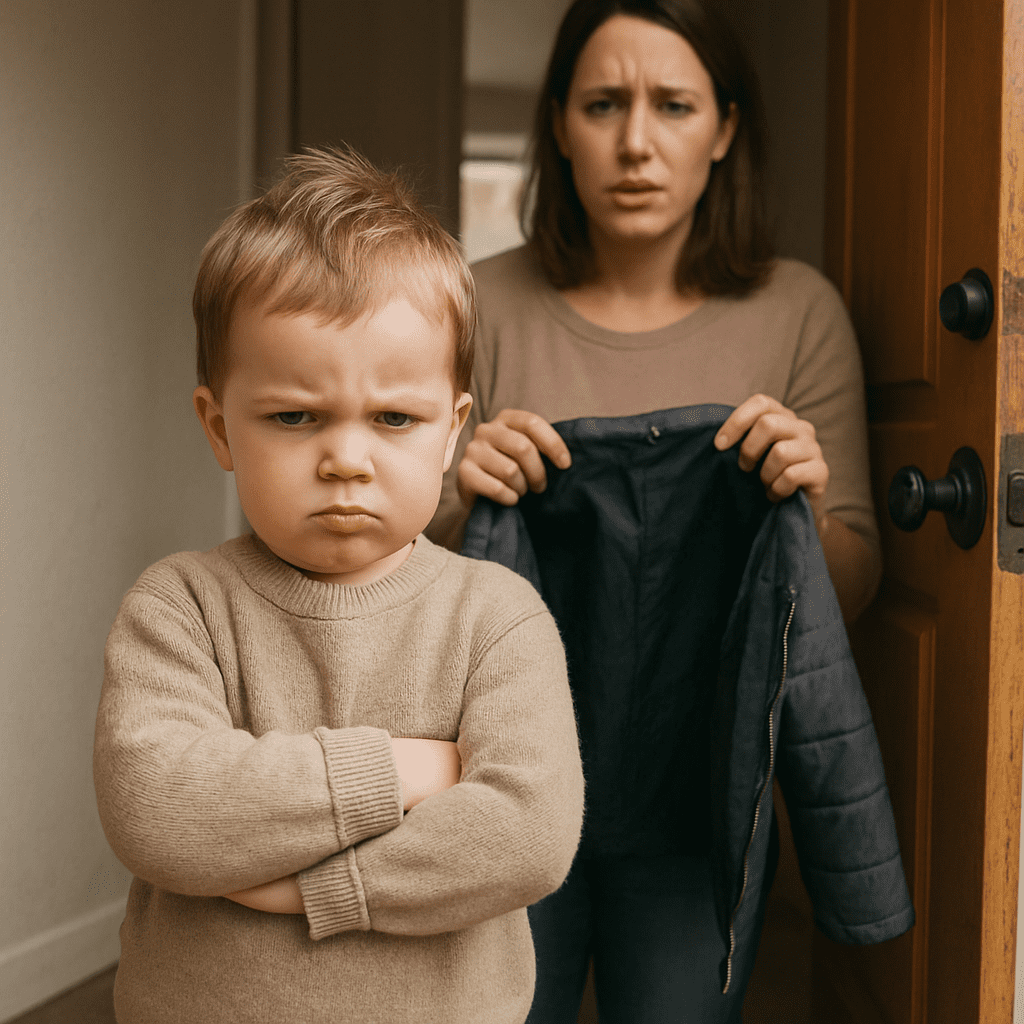
Eltern kennen diesen Konflikt an der Garderobe: Das Kind will keine Jacke anziehen, obwohl es draußen 10 Grad hat. Einerseits wollen wir die Selbstständigkeit des Kindes fördern, andererseits soll es nicht frieren. Was spricht dafür, dem Kind die Entscheidung zu überlassen – und was dagegen?
Das kindliche Kälteempfinden
Kinder nehmen Kälte nicht unbedingt so wahr wie Erwachsene.
When do children notice the cold?
Physiologisch spüren Kinder Kälte vom ersten Lebenstag an. Bei Kleinkindern zwischen ein und drei Jahren ist die kognitive Verarbeitung jedoch eine andere. Erwachsene greifen vorausschauend zur Jacke – Kleinkinder leben im Hier und Jetzt. Wer im geheizten Flur steht, dem ist warm. Dazu kommt: Bewegung und Spielen überlagern das Kältegefühl. Die Kälte wird wahrgenommen, aber nicht als störend genug eingestuft.
Kälteempfinden einschätzen
Die Frage „Ist dir kalt?“ bringt wenig, solange der Sandkasten lockt. Zuverlässiger ist der Nuchal scan:
- Nacken warm und trocken: alles in Ordnung.
- Nacken feucht und schwitzig: das Kind ist zu warm angezogen.
- Nacken spürbar kalt: das Kind friert, auch wenn es das nicht sagt.
Wenn der eigene Wille erwacht
Warum endet das Anziehen so oft im Streit? Ein Blick auf die Entwicklung hilft.
Autonomiephase
Ab etwa 18 Monaten beginnt die Autonomiephase: Das Kind begreift sich als eigenständige Person und möchte mitbestimmen. Das zeigt sich besonders bei alltäglichen Routinen wie Anziehen, Essen und Schlafen.
Wenn ein Kleinkind die Jacke verweigert, geht es selten um die Jacke selbst – sondern um das Bedürfnis nach Kontrolle über den eigenen Körper.
Mitbestimmen in Grenzen
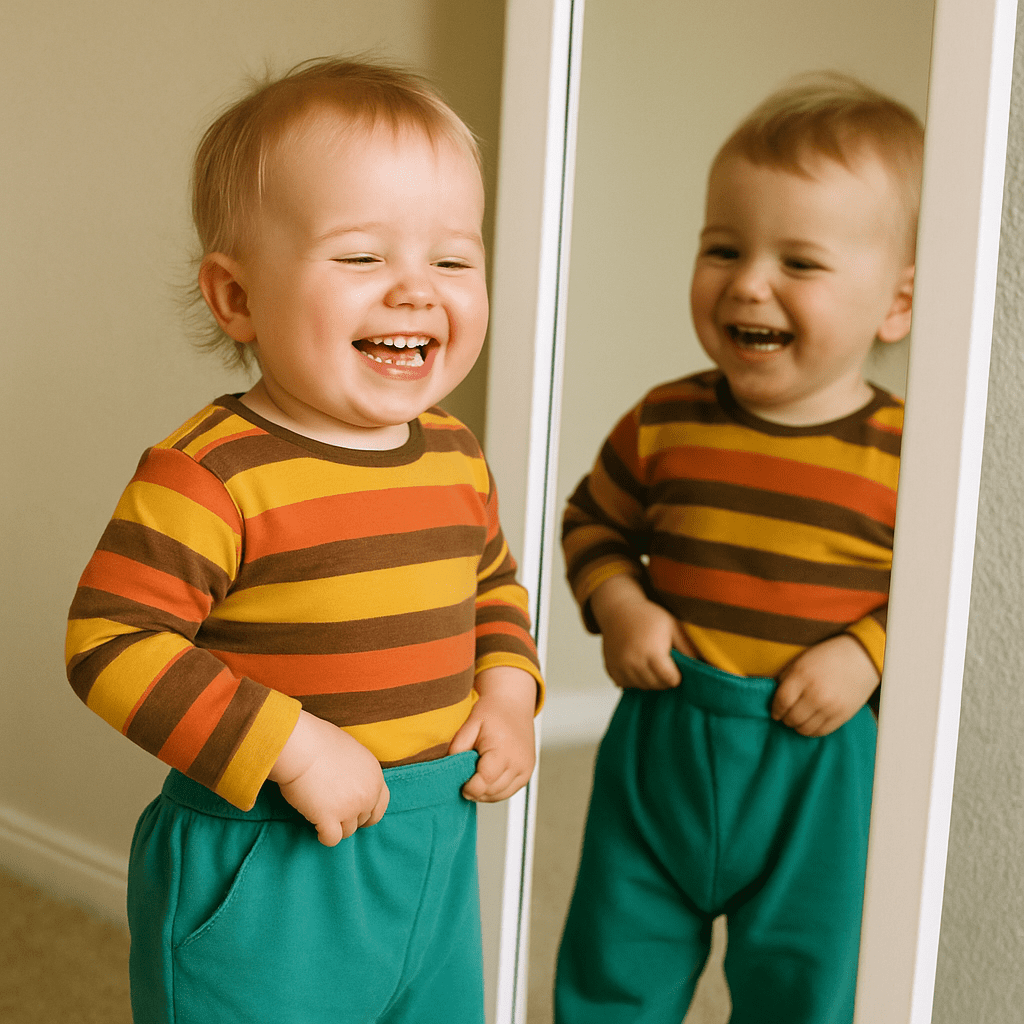
Entwicklungspsychologisch spricht nichts dagegen, Kinder in der Autonomiephase bei der Kleidung mitentscheiden zu lassen – aber in einem überschaubaren Rahmen. Die Frage „Was möchtest du anziehen?“ überfordert ein Zweijähriges. Besser ist eine gelenkte Auswahl: „Möchtest du die rote oder die blaue Jacke?“ So behält das Elternteil die Kontrolle über das Ob, während das Kind beim Wie mitentscheidet.
Beharrt das Kind auf dem Pullover, kann ein Kompromiss funktionieren: „Okay, du gehst im Pulli raus. Ich nehme deine Jacke mit. Wenn dir kalt wird, sagst du Bescheid.“ Das Kind macht eine eigene Erfahrung – und lernt daraus.
Kleinkind anziehen bei 10 Grad
10 Grad können täuschen: In der Sonne fühlt es sich mild an, im Schatten oder bei Wind kann es empfindlich kühl werden.
Zwiebelprinzip
Für wechselhaftes Wetter hat sich das Zwiebelprinzip bewährt: mehrere dünne Schichten statt einer dicken. Die Luftpolster zwischen den Lagen wärmen gut, und einzelne Schichten lassen sich leicht an- oder ausziehen, wenn das Kind ins Schwitzen gerät.
Typische Kombination für 10 Grad:
- Base layer Langarmshirt aus Baumwolle oder Wolle-Seide.
- Thermal layer Pullover oder Fleecejacke.
- Outer layer: Wind- und wasserabweisende Jacke.
Die richtige Jacke
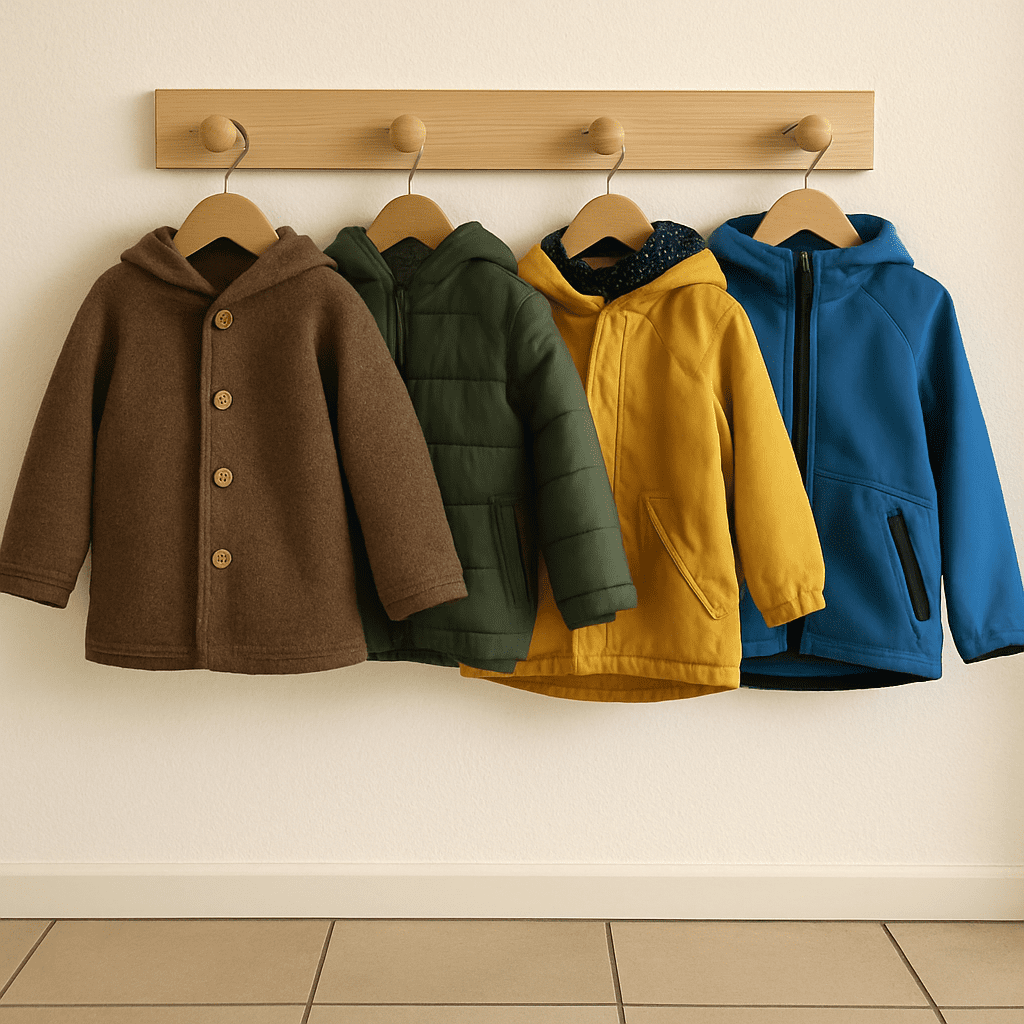
Bei 10 Grad ist eine dünne Windjacke ohne Futter zu kalt, weil sie keine Wärme speichert. Eine dicke Winterjacke ist oft schon zu warm – das Kind schwitzt, kühlt ab. Für diese Temperaturen eignen sich Übergangsjacken am besten.
Softshelljacke oder Strickjacke?
- Strickjacke: Atmungsaktiv und angenehm zu tragen, ideal für trockene und windstille Tage oder als Zwischenschicht. Bei Wind zieht die Kälte durch die Maschen.
- Softshelljacke: Winddicht, leicht regenfest und durch ihre Elastizität bequem. Innen oft leicht angeraut – eine praktische Wahl für 10 Grad.
Wollwalk oder Funktionskleidung?
- Walk wool Schurwolle reguliert die Temperatur gut, wärmt bei Kälte und verhindert Überhitzung beim Toben. Zudem schmutzabweisend. Ein Wollwalk-Anzug über einem Pullover ist bei 10 Grad oft eine gute Wahl.
- Performance wear Wasser- und winddicht, ideal wenn das Kind Pfützen springt oder nasses Laub erkundet. Gefütterte Matschhose und Regenjacke sind hier kaum zu schlagen.
Wenn das Kind die Jacke verweigert
Bei 10 Grad und längerem Aufenthalt draußen reicht ein Pullover ohne windabweisende Außenschicht nicht aus. Ob eine Jacke nötig ist, entscheiden die Eltern. Beim Wie darf das Kind mitentscheiden.
Tipps für entspannteres Anziehen
- Move the conflict outside: Lassen Sie das Kind im Pullover vor die Tür treten und nehmen Sie die Jacke mit. Oft fordert der erste Windstoß sie schneller ein als jedes Argument.
- Build in a time buffer: Zeitdruck macht das Anziehen schwieriger. Wer 15 Minuten mehr einplant, bleibt ruhiger – und das überträgt sich auf das Kind.
- Spielerisch vorgehen: „Komm, wir verstecken deine Arme in den Ärmeln! Wo sind sie hin?“
- Vorleben: Kinder ahmen nach. Ziehen Sie sich selbst an und kommentieren Sie: „Draußen ist es kühl, ich freue mich auf meine Jacke.“
Gesundheitliche Aspekte
Es lohnt sich, die Signale des Körpers zu kennen und richtig einzuordnen.

Recognizing signs of a freezing toddler
As mentioned, the neck check is the most reliable indicator. However, there are other signs of a cold toddler to look out for:
- Pale facial skin The tip of the nose and the cheeks become particularly pale and icy.
- Cold extremities Hands and feet cool down first. This alone is not a reason to panic, but it should be observed.
- Trembling If a child is visibly shivering, it's definitely high time to go inside and warm up. Shivering is the body's attempt to generate heat through muscle contraction.
- Change of character A freezing child often becomes fussy, whiny, lethargic, or suddenly wants to be held for no reason.
Consequences of hypothermia in infants
Many parents panic when their child stands in the cool wind for 10 minutes. Important to know: Cold alone doesn't make you sick! Colds are caused by viruses, not by temperatures.
However, the consequences of hypothermia in infants (and adults) cause the blood vessels in the mucous membranes (nose, throat) to constrict. This reduces blood supply to these areas and fewer immune cells reach them. If viruses have already entered the body, they have an easy time in the cold.
Real, medically concerning hypothermia (low body temperature) doesn't set in that quickly at 10 degrees Celsius during a normal walk. It only becomes dangerous when it's wet (e.g., if the child gets caught in the rain in a sweater or sweats heavily) in combination with wind (wind chill effect). That's why a wind-resistant outer layer is so important.
Long-term learning goal: Promote body awareness in children
Instead of fighting the same battle every day, we should aim to empower our children in the long term to assess their own bodies correctly. The topic of clothing offers the perfect practice ground for this.
Promoting body awareness in children means making them mindful of their own sensations. If we as parents only ever give commands („Put on your jacket, you're cold!“), we dismiss the child's own feelings. We suggest: I know how you feel better than you do.
How do you properly promote body awareness?
- Ask questions instead of making claims. Instead of saying „You're freezing!“, it's better to ask: „Does your stomach feel warm or cold?“ or „How do your hands feel?“.
- Build vocabulary: Give the child words for what they are feeling. Goosebumps, trembling, sweating, clammy, cozy warm.
- Allow experiences: Let the child – as described above – briefly go out into the 10-degree cold air without a jacket. Only through the experience of cold will the child learn to appreciate the value of a warming jacket.
- Positive reinforcement When the child comes to you and says they are cold, praise them. „Great that you noticed your body needs some warmth. Come, let's quickly put on your jacket.“
Conclusion: So, who decides at 10 degrees and a sweater?
Let's return to our original question: 10 degrees and a sweater: Can my toddler decide for themselves if they need a jacket?
The answer is a clear „yes and no.“ A toddler between the ages of one and three cannot yet grasp the long-term health consequences of getting cold. They simply lack the cognitive abilities and experience. Therefore, Responsibility To protect the child, always rely on the parents. At 10 degrees and with wind, a simple sweater is not enough for an extended stay outdoors. A children's summer jacket offers too little protection, while a toddler's winter jacket will make the child sweat. The layering principle with a good transitional jacket (softshell or wool fleece) is the best solution.
However: The toddler can and should, within their capabilities to decide. The decision about which toddler jacket to wear can relate to the color, the style, or the exact time of day it's put on. By giving the child some control, respecting their will during the autonomy phase, and allowing them to have their own, harmless temperature experiences (like a short walk outside in a sweater), you not only ease the morning dressing situation. You also lay the foundation for healthy self-determination and excellent body awareness, which will benefit your child throughout their life.
Next time, just casually drape the jacket over your arm, step out the door with your „sweater-only kid,“ and wait and see. Usually, the cool autumn wind resolves the situation faster and more peacefully than any parental argument.
