
Scham ist nicht per se schlecht. Sie erfüllt eine soziale Funktion und zeigt, dass ein Kind einen Entwicklungsschritt gemacht hat – hin zu mehr Empathie und einem besseren Verständnis sozialer Zusammenhänge.
Dieser Artikel erklärt, warum Scham zum Aufwachsen dazugehört, wie ungesunde Entwicklungen entstehen und wie Eltern ihr Kind dabei begleiten können.

When do children develop a sense of shame?
In den ersten Lebensmonaten kennen Babys keine Scham. Sie schreien, weinen, lachen und erkunden ihren Körper ungeniert. Um Scham empfinden zu können, braucht ein Kind die Fähigkeit zu verstehen, dass andere Menschen eigene Gedanken und Bewertungen haben.
Diese Fähigkeit entwickelt sich meist zwischen dem zweiten und dritten Lebensjahr. Kleinkinder erkennen sich in dieser Phase nicht nur selbst im Spiegel, sondern begreifen auch, dass sie von außen wahrgenommen werden.
Daher wirkt es manchmal überraschend: Ein Kind, das früher freudig nackt durch den Garten rannte, hält sich plötzlich verschämt die Hände vors Gesicht, wenn Besuch kommt. Das ist kein Rückschritt, sondern ein kognitiver Fortschritt. Das Kind hat verstanden: „Ich bin ein eigenständiges Ich, und andere haben eine Meinung über mich.“
The Positive Function of Shame
Scham wird oft nur als negatives Gefühl betrachtet. Dabei hat sie durchaus nützliche Funktionen im sozialen Miteinander.
- Schutz von Intimität und Grenzen: Scham signalisiert dem Kind, wenn persönliche Grenzen – körperlich oder seelisch – überschritten werden.
- Soziale Anpassung: Durch Scham lernen Kinder, welche Verhaltensweisen in ihrer Gemeinschaft akzeptiert sind und welche nicht. Sie ist Teil der moralischen Entwicklung. Ohne die Fähigkeit, Scham zu empfinden, gäbe es wenig Rücksichtnahme im Umgang miteinander.

Der Unterschied zwischen Scham und Schuld
Scham und Schuld werden im Alltag oft vermischt, sind aber unterschiedliche Gefühle.
- Guilt refers to a Plot. The child thinks: „Ich habe etwas Schlechtes getan.“ Schuldgefühle können konstruktiv sein, weil sie den Wunsch wecken, einen Fehler wiedergutzumachen.
- Shame bezieht sich auf die Person als Ganzes. The child thinks: „Ich bin schlecht.“ Scham führt zum Rückzug und dem Wunsch, unsichtbar zu sein.
Beide Emotionen gehören zur Entwicklung, aber Scham ist für Kinder belastender, weil sie den eigenen Selbstwert infrage stellt.
Ursachen und körperliche Signale
Scham entsteht häufig, wenn ein Kind das Gefühl hat, den Erwartungen nicht zu genügen, bei etwas Intimem „ertappt“ zu werden oder ungewollt im Mittelpunkt zu stehen.
Körperliche Anzeichen lassen sich beobachten:
- Blush Die stärkste und unkontrollierbarste körperliche Reaktion.
- Blickvermeidung: The child stares fixedly at the ground.
- Posture Eingezogene Schultern, das Kind macht sich klein.
- Flucht oder Erstarren: Weglaufen, sich verstecken oder völlige Bewegungs- und Sprachlosigkeit.
- Displacement activities Manche Kinder reagieren mit plötzlicher Aggression oder aufgesetztem Lachen, um das Schamgefühl zu überdecken.
Wenn Scham belastend wird
Toxische Scham entsteht, wenn einem Kind wiederholt vermittelt wird, dass es als Person grundlegend falsch oder nicht liebenswert ist. Sätze wie „Schäm dich, dass du immer noch ins Bett machst!“ or „Du bist unmöglich!“ greifen die kindliche Identität an.
Besonders belastend ist Bloßstellung vor anderen – Geschwistern, Mitschülern oder Fremden. Solche Erfahrungen können sich tief einprägen und langfristig zu Minderwertigkeitsgefühlen, sozialen Ängsten oder Perfektionismus führen.
Fehlverhalten darf und soll korrigiert werden – aber auf der Handlungsebene („Was du getan hast, war nicht in Ordnung“), nicht auf der Persönlichkeitsebene („Du bist ein böses Kind“).
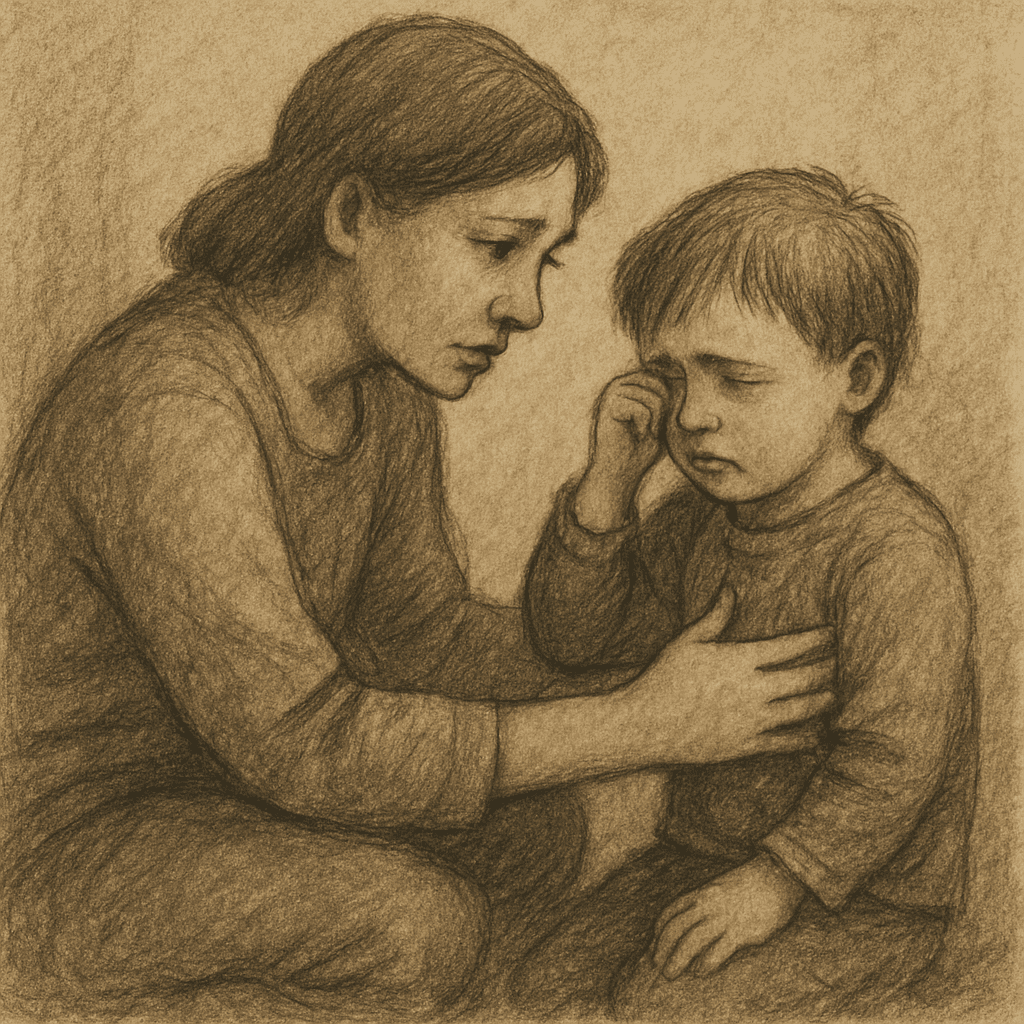
Developmental Stages: From Elementary School to Puberty
The experience of shame changes significantly as we grow up. If we look at the Shyness in adolescence vs. childhood considering, clear differences are noticeable.
The primary school age
In this phase, the peer group comes into focus. This is often where Social anxiety in primary school. The fear of reading something wrong in front of class, being laughed at, or not wearing the „right“ clothes is increasing. Shame is shifting from parents to peer evaluation.
Puberty
Shyness often reaches its peak during adolescence. The body undergoes rapid changes, leading to extreme insecurities. Adolescents often feel as though they are constantly on an inner stage. Pimples, the first signs of hair growth, menstruation, or voice breaking are highly sensitive topics. Adolescents also strongly assert their boundaries; parental invasion of privacy (e.g., entering their room without permission) is perceived as massively shameful and intrusive.
Practice Guide: Dealing with Shame Correctly
How can you as a caregiver now react when your child is caught in a situation of shame? A constructive Dealing with Shame requires a delicate touch.
Here are concrete and proven strategies:
1. Stay calm and provide protection
How do parents react to embarrassing situations best? If your child trips over a display in the supermarket and everything falls over, the first reaction is often anger or embarrassment. Try to remain calm. Never laugh at your child (not even out of embarrassment). Offer them protection immediately. A simple: „Come on, let's pick this up together, that can happen to anyone.“, works wonders.
2. Empathy instead of downplaying
Don't say: „It's not that bad!“ For the child, it's a catastrophe at this moment. A Empathetic support during experiences of shame means validating the feeling. Say instead: „Oh, that was really embarrassing for you, wasn't it? I can totally understand that. I spilled coffee all over the table at work the other day, and I turned bright red too.“ Normalizing the feeling pulls the child out of their emotional isolation.
3. Carefully address sensitive topics
Whether it's about sex education, personal hygiene, bedwetting in elementary school, or bad grades: parents should Address sensitive topics with care. Do this in private, in a relaxed setting, and never in front of siblings or relatives. Use soft, non-accusatory language and signal: „You are safe, and I love you, no matter what.“
4. Actively build self-worth
A child with a strong inner foundation can shake off embarrassing situations more easily. To that Strengthening Self-Esteem in Children be able to, praise effort (instead of just the result), show genuine interest in their thoughts, and give them age-appropriate responsibility. Those who know they can do something well and are valued are not derailed by an embarrassing moment.
5. Establish a culture of error at home
If Shame in children If perfectionism becomes chronic, it's often due to a perfectionistic atmosphere in the parental home. Show your child that mistakes are normal. Share things at the dinner table that you failed at today, and laugh together about your own (harmless) clumsiness. This teaches the child: mistakes do not mean losing love and belonging.

Conclusion: Shame as a bridge, not a wall
Feelings of shame in children are not a cause for concern, but rather a sign of emotional maturity and social sensitivity. They protect the soul and help our children grow into empathetic, considerate adults.
The goal of education should never be to completely rid children of shame. Rather, it's about keeping destructive, toxic shame at bay and giving the child the security that their core—their authentic self—always remains inviolable and lovable. When we lovingly support and accompany our children through their most embarrassing moments, we transform shame from an isolating wall into a bridge, making our bond with them even deeper and more trusting.
