
Wer versteht, was während der Geburt passiert, kann ruhiger damit umgehen. Dieser Artikel erklärt, wie eine vaginale Geburt abläuft, was in den einzelnen Phasen körperlich geschieht und wie die Begleitperson helfen kann.
Die Zeit vor der Geburt
Bevor die eigentlichen Geburtsphasen beginnen, leistet der Körper oft schon tagelang Vorarbeit. Wie erkennt man, ob es wirklich losgeht?
Vorwehen oder Geburtswehen?
Gegen Ende der Schwangerschaft spüren viele Frauen ein Hartwerden des Bauches.
- Practice contractions ( Braxton Hicks contractions/lightening contractions) Meist unregelmäßig, klingen nach einiger Zeit ab und verändern ihre Intensität nicht wesentlich bei einem Positionswechsel oder einem warmen Bad. Sie helfen dabei, das Köpfchen des Babys tiefer ins Becken zu schieben.
- Labor pains Kommen in regelmäßigen, kürzer werdenden Abständen, die Intensität nimmt stetig zu. Ein warmes Bad lässt sie meist nicht verschwinden, sondern verstärkt sie oft.
The bursting of the amniotic sac
Nicht bei jeder Frau beginnt die Geburt mit Wehen. Manchmal macht zuerst die Fruchtblase auf sich aufmerksam – als plötzlicher Schwall klarer Flüssigkeit oder nur tröpfchenweise, wenn der Riss weit oben liegt. Fruchtwasser ist meist farb- und geruchlos oder riecht leicht süßlich. Bei Verdacht sollten Sie Ihre Hebamme oder Klinik kontaktieren.
When to go to the delivery room?
Als Faustregel gilt beim ersten Kind: Wenn die Wehen über etwa ein bis zwei Stunden regelmäßig alle 5 bis 7 Minuten kommen und jeweils rund eine Minute andauern, ist es Zeit aufzubrechen. Bei weiteren Schwangerschaften sollten Sie früher fahren, da die Geburt oft schneller voranschreitet. Auch bei Blasensprung, Blutungen oder wenn Sie sich zu Hause nicht mehr sicher fühlen, fahren Sie in die Klinik oder ins Geburtshaus.
Die 4 Phasen der Geburt
Jede Geburt verläuft anders. Manche Frauen gebären in wenigen Stunden, andere brauchen mehr als einen Tag. Der körperliche Ablauf folgt dennoch immer dem gleichen Schema und wird medizinisch in vier Phasen unterteilt:
- The opening phase (including the latency phase)
- The transition phase
- The expulsion phase
- The afterbirth stage
Phase 1: The Opening Phase
Die Eröffnungsphase ist die längste Phase. Der Gebärmutterhals (Zervix) verstreicht, und der Muttermund öffnet sich vollständig, damit das Baby den Geburtskanal passieren kann.
The early opening phase (latency phase)
Der Gebärmutterhals, der in der Schwangerschaft etwa drei bis vier Zentimeter lang und fest verschlossen war, wird weich, verkürzt sich, und der Muttermund öffnet sich auf drei bis vier Zentimeter.
- The contractions Noch gut auszuhalten, ähneln starken Regelschmerzen und kommen oft im Abstand von 10 bis 20 Minuten.
- What you can do: Bleiben Sie so lange wie möglich zu Hause. Lenken Sie sich ab, versuchen Sie zu schlafen. Energie sparen ist hier sinnvoll.
The active opening phase
Ab etwa vier Zentimetern Muttermundsöffnung beginnt die aktive Phase. Beim ersten Kind rechnet man im Durchschnitt mit etwa 8 bis 14 Stunden für die gesamte Eröffnungsphase, bei weiteren Kindern oft deutlich weniger. Die Wehen kommen nun alle 3 bis 5 Minuten, sind kräftig und erfordern volle Konzentration – während einer Wehe ist Sprechen kaum noch möglich.
Der Muttermund ist ein ringförmiger Muskel am unteren Ende der Gebärmutter. Durch das Zusammenziehen der Gebärmuttermuskulatur wird das Baby nach unten gedrückt, während sich die Muskelfasern nach oben zurückziehen – so öffnet sich der Muttermund bei jeder Wehe ein Stück weiter, bis er einen Durchmesser von etwa 10 Zentimetern erreicht.
Phase 2: The Transition Phase
Die Übergangsphase ist die kürzeste, aber oft intensivste Phase. Sie markiert den Übergang von der Eröffnungs- zur Austreibungsphase – von etwa 8 bis 10 Zentimetern Muttermundsöffnung.
Die Wehen kommen jetzt fast ohne Pause. Viele Frauen fühlen sich überrollt, klagen über Übelkeit und Zittern und denken: „Ich kann nicht mehr.“ Für Hebammen ist das ein Zeichen, dass das Baby fast da ist.
Atmen in der Übergangsphase
Bewusstes Atmen hilft in dieser Phase besonders. Da die Wehen so stark sind, neigen viele Frauen dazu, zu verkrampfen oder die Luft anzuhalten.
- Breathe deep into your belly: Beim Ausatmen bewusst loslassen – Schultern senken, Kiefer entspannen.
- Sound: Ein tiefes „Aaaa“ oder „Oooo“ beim Ausatmen hilft, den Schmerz zu verarbeiten und den Beckenboden zu entspannen. Hohe Töne wie „Iiii“ spannen Kiefer und Beckenboden eher an.
- Avoid panting Zu flaches Atmen kann durch Hyperventilation zu Schwindel führen. Hebammen leiten hier oft zu einer rhythmischen Atmung an.

Pain management and medical assistance
In the active phase of labor and transition, many women seek pain relief options. There are numerous choices, from natural methods to medical interventions.
Natural Ways to Relieve Pain
Natural Pain Relief During Childbirth has the advantage that it has no side effects for mother and child.
- Water A stay in the birthing tub or under a warm shower has a cramp-relieving and relaxing effect.
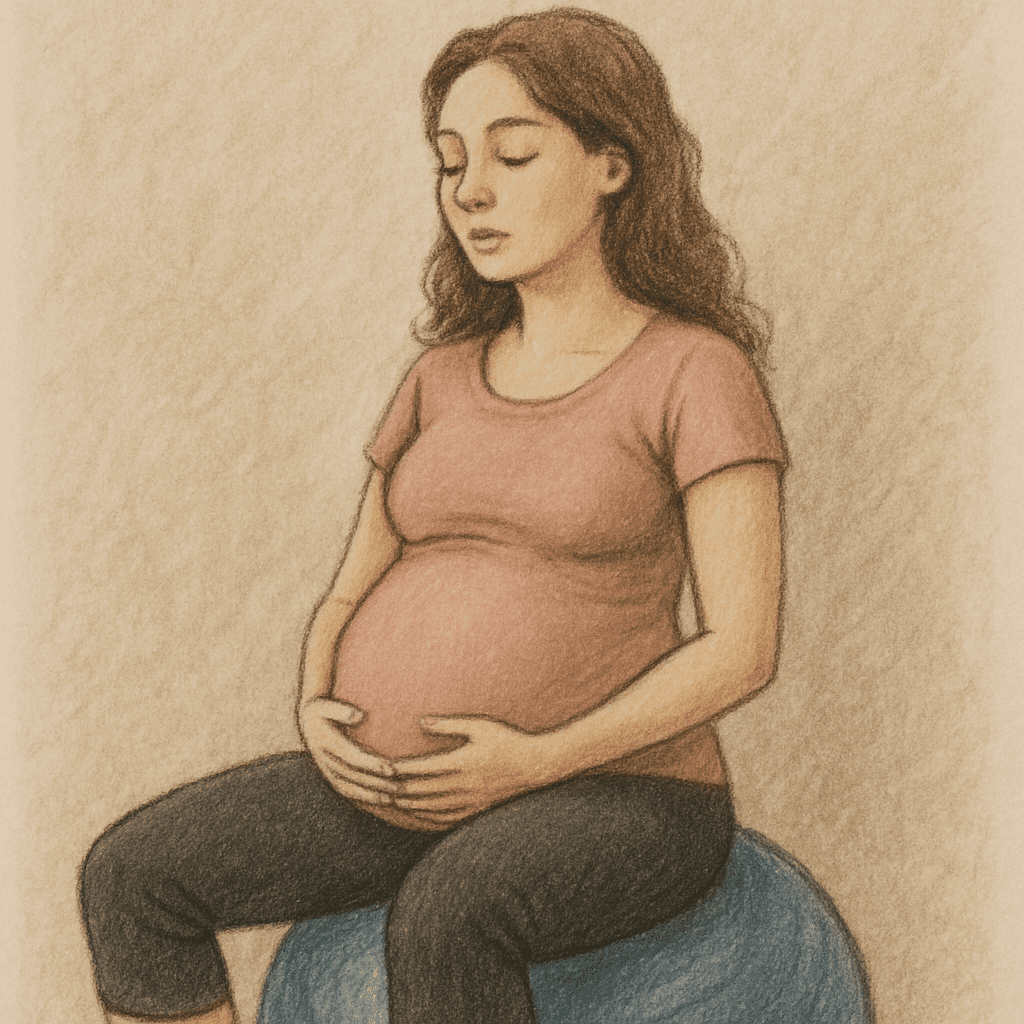
- Movement and Positions: Changing positions can work wonders. Doing pelvic tilts on a stability ball also helps the baby descend deeper into the pelvis.
- Massages and Acupuncture: Gentle pressure on the lower back by a partner or acupuncture by the midwife relieves the pain stimulus.
The PDA: A Consideration
If natural methods are not sufficient, many women opt for an epidural anesthetic (epidural). It is important to, PDA Risks and Benefits Compared to consider:
- Advantages: It almost completely takes away the pain, allowing exhausted mothers to rest and gather strength for the pushing stage.
- Risks/Disadvantages: The epidural anesthetic can weaken contractions (an IV drip to strengthen contractions is often necessary), it restricts freedom of movement (you often have to stay in bed), and it can lead to you feeling the urge to push less strongly during the pushing phase, which can prolong this phase.
When nature needs a nudge
Sometimes not everything goes according to plan, and Medical interventions in vaginal birth becoming necessary. This can include administering oxytocin to stimulate labor if it weakens. In the later pushing stage, if labor stalls or the baby's heart tones are poor, a vacuum extractor may be used to deliver the baby safely and quickly.
Phase 3: The Expulsion Phase
The cervix is now completely (10 cm) dilated. The baby has found its way into the birth canal. The active labor now begins.
The course of the expulsion phase
The Course of the expulsion phase in detail often begins with a short break in contractions, allowing the mother to gather strength. Then the nature of the contractions changes. They become pushing contractions. You will now feel an overwhelming, reflexive urge to push along – comparable to an extremely strong urge to defecate. The baby turns through the female pelvis (a screw-like motion) deep downwards. With each contraction, you push the head further towards the exit. In the end, the head stretches the perineal area enormously (called the „ring of fire“ because it can burn intensely) until the head is born. With the next contraction, the shoulders follow, and finally, the rest of the body. The baby is born!
The best positions
Anyone lying on their back in bed is working against gravity. Birth positions for easier delivery use gravity and enlarge the pelvic outlet
- Crawling position Relieves the back and helps with severe back pain.
- Hockey The basin diameter is maximized here.
- Side position Ideal when you are exhausted but want to keep your hips mobile.
- Standing (supported by rope or partner): Gravity works optimally.
Prevent perineal tears
Many women are very afraid of birth injuries. One can Preventing perineal tears through perineal massage, which is regularly performed at home with a special oil starting from the 34th week of pregnancy. This makes the tissue soft and supple. During the pushing stage, the midwife can also apply warm, moist compresses to the perineum. This so-called „perineal protection“ promotes blood circulation and helps the tissue stretch over the baby's head without tearing.
Phase 4: The Afterbirth Phase
The baby lies crying and warm on your chest. But the birth is not quite over yet. The fourth and final stage is the Placental abruption and the postpartum period.
About 10 to 30 minutes after the baby is born, the uterus contracts again. These after-pains are significantly weaker than the labor contractions. These contractions cause the placenta to detach from the uterine wall. Usually, a gentle pushing effort by the mother is enough, and the placenta is born along with the fetal membranes. The midwife will carefully check the placenta for completeness. If any remnants remain in the uterus, it can lead to infections or heavy bleeding. Once the placenta is delivered, the vaginal birth is officially complete. Any birth injuries, such as a perineal tear or vaginal tear, will now be medically treated and sutured (under local anesthesia, of course).
Teamwork in the Delivery Room: The Role of the Support Person
Birth is a team-based process. The Partner support in the delivery room (or a doula, sister, friend) is invaluable. Women who feel well-supported statistically need pain medication less often.
What the partner can specifically do:
- Make space Create a calm, protective atmosphere (dim lights, minimize disruptive noises).
- Physical Support Lower back massages, handing over water or lip balm, assisting with position changes.
- To be a lawyer: Communicate the woman's wishes from the birth plan to the medical staff, especially if the woman cannot speak during labor.
- Giving mental strength: Encouragement like „You're doing great,“ „Every contraction brings our baby closer,“ or synchronized breathing helps the birthing woman immensely to stay focused.
Conclusion: Trust your body
The journey through the Stages of Birth – How a Vaginal Birth Unfolds is a masterpiece of nature. From the first gentle contractions to the powerful pushing stage, you, as the expectant mother, go through a process that has been anchored in the female body for millennia.
By familiarizing yourself beforehand with the physical processes, practicing breathing techniques, and learning about pain relief options and possible interventions, you take the unknown out of birth. Always remember: every birth is unique. Sometimes plans change in the delivery room, and that's perfectly okay. The most important thing is that you feel safe, listen to your gut feeling, and trust your body. At the end of this incredible journey, the most beautiful reward awaits: the first look into your baby's eyes.
