
Studien zeigen: Väter berichten häufiger von Zufriedenheit in der Elternrolle als Mütter. Das liegt weniger an der Liebe zum Kind als an strukturellen Unterschieden – in der Aufgabenverteilung, den gesellschaftlichen Erwartungen und der Art, wie Elternschaft im Alltag gelebt wird.
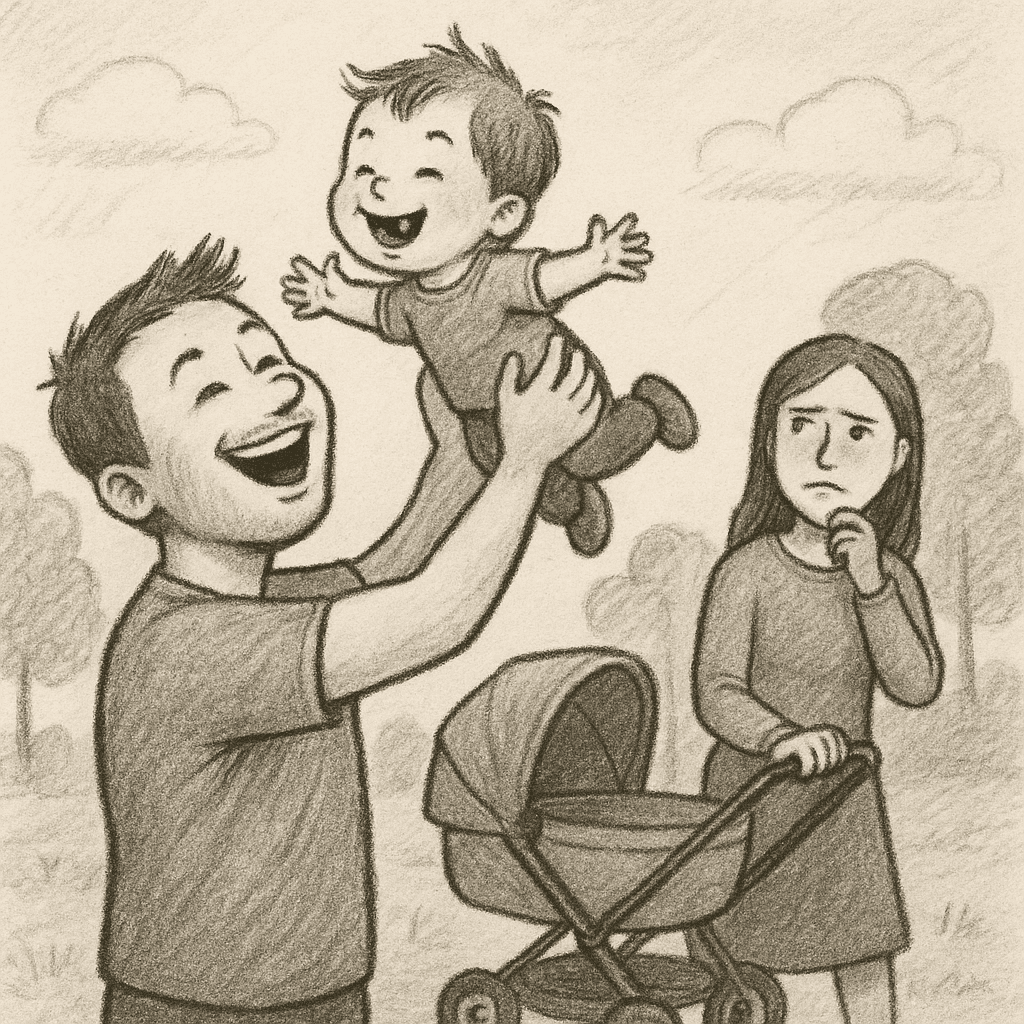
Das „Parenting Happiness Gap“: Was die Wissenschaft sagt
Was zeigen Studien zur Elternzufriedenheit?
Untersuchungen der University of California und des Pew Research Centers kommen zu einem ähnlichen Ergebnis: Väter berichten bei der Kinderbetreuung von mehr Freude, weniger Stress und weniger Erschöpfung als Mütter. Der Unterschied liegt dabei nicht in der Zuneigung zum Kind, sondern darin, wie die Elternrolle im Alltag gelebt wird.
The reality behind the numbers
Väter erleben die Zeit mit ihren Kindern tendenziell positiver. Mütter hingegen berichten häufiger von Schlafmangel, chronischem Stress und depressiven Verstimmungen. Das „Parenting Happiness Gap“ lässt sich auf konkrete Ursachen zurückführen.
Dads play, moms care: The invisible division
Leisure vs. Duty: The Quality of Time Spent
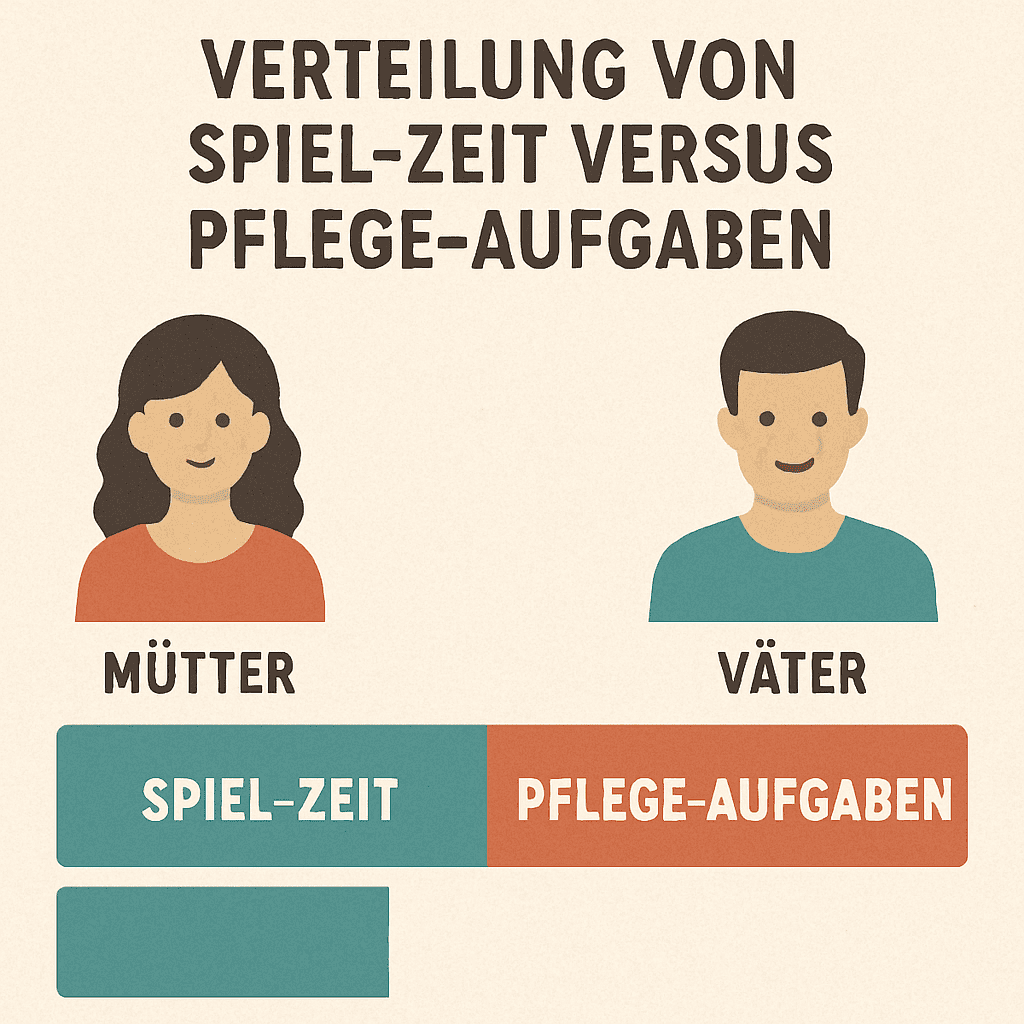
Was Väter und Mütter mit ihren Kindern tun, unterscheidet sich erheblich:
- Väter übernehmen häufiger die stressarmen Aktivitäten: Ausflüge, Toben, Vorlesen, Spielplatz.
- Mütter übernehmen den Großteil der belastenderen Aufgaben: Morgenroutinen, Pflege bei Krankheit, Wutanfälle managen.
Pflegearbeit ist repetitiv, oft undankbar und findet unter Zeitdruck statt. Spielen erzeugt unmittelbare positive Rückmeldungen.
Unbezahlte Care-Arbeit und Zufriedenheit
Frauen leisten auch in westlichen Ländern nach wie vor den Großteil der unbezahlten Haus- und Familienarbeit – oft parallel zur Kinderbetreuung. Wer gleichzeitig ein weinendes Kind beruhigt, das Essen im Blick behält und auf den Wäschepiep reagiert, steht unter erheblichem Stress. Eine ungleiche Verteilung dieser Aufgaben belastet die Lebenszufriedenheit des stärker beanspruchten Elternteils spürbar.
Die unsichtbare Last: Mental Load
In den meisten Familien trägt die Mutter zusätzlich den sogenannten Mental Load – die kognitive Planungsarbeit des Familienalltags. Dazu gehört zum Beispiel:
- Wann welche Impfung ansteht.
- Dass die Gummistiefel zu klein werden.
- Welches Kind beim Kindergeburtstag eine Erdnussallergie hat.
- Dass heute der Bastelkarton mit in die Kita muss.
Dieser Hintergrundstrom an Aufgaben läuft oft auch dann, wenn der Vater das Kind betreut – weil die Mutter im Vorfeld gepackt und organisiert hat. Wer diesen kognitiven Ballast nicht trägt, kann unbeschwerter mit dem Kind in Kontakt gehen.
Vater-Kind-Beziehung
Väter heute wollen präsent sein – nicht mehr nur als Verdiener, sondern als aktiv beteiligte Elternteile.
How fathers experience bonding with their child
Während Mütter durch Schwangerschaft, Geburt und Stillen einen biologisch engen Start haben, erarbeiten sich Väter die Bindung meist aktiv. Viele berichten, dass sie besonders stark wächst, wenn das Kind anfängt zu interagieren – zu lächeln, zu greifen, zu sprechen. Physisches Spiel spielt dabei eine zentrale Rolle: Toben, Balancieren, Werfen. Das Kind lernt so Vertrauen und Risikoeinschätzung, der Vater erlebt sich als verlässliche Bezugsperson.

Aktive Vaterschaft: Vorteile für alle
Wenn Väter sich aktiv einbringen, profitiert die ganze Familie:
- For the child: Kinder aktiver Väter zeigen häufig eine bessere kognitive Entwicklung, höhere emotionale Intelligenz und weniger Verhaltensauffälligkeiten.
- For your partner: Echte Beteiligung – inklusive Übernahme von Mental Load – entlastet die Mutter und senkt das Risiko für Erschöpfung.
- Für den Vater: Aktive Väter berichten von höherem Selbstwertgefühl und einem stärkeren Sinn. Empathie, Geduld und Zeitmanagement, die sie dabei entwickeln, kommen auch im Beruf zugute.
Gesellschaftlicher Erwartungsdruck
Unterschiedliche Maßstäbe für Mütter und Väter
Von einer „guten Mutter“ wird erwartet, dass sie natürlich gebiert, stillt, selbst kocht, bindungsorientiert erzieht, berufstätig ist und dabei gepflegt und organisiert wirkt. Dieser Anspruchsmix erzeugt dauerhaftes schlechtes Gewissen – das sogenannte „Mom Guilt“. Mütter fühlen sich häufig unzulänglich, egal was sie tun.
Väter hingegen erhalten für basale elterliche Handlungen oft Lob und Anerkennung – etwa wenn sie das Kind in der Trage tragen oder vom Kindergarten abholen. Für Mütter gelten dieselben Dinge als selbstverständlich. Dieser Unterschied in der sozialen Rückmeldung beeinflusst das Wohlbefinden beider Seiten.
Beruf, Karriere und Identität
Vereinbarkeit für Väter und Mütter
Väter können ihre Karriere nach der Geburt eines Kindes meist weiterführen, ohne berufliche Einbußen hinnehmen zu müssen. Gesellschaftlich gelten sie nach der Familiengründung oft sogar als besonders verlässlich – der sogenannte „Fatherhood Bonus“. Mütter hingegen sind häufig von der „Motherhood Penalty“ betroffen: Gehaltseinbußen, Teilzeitfallen, Karriereknick. Diese unterschiedliche Ausgangslage beeinflusst, wie entspannt oder belastet Elternschaft erlebt wird.
Impact of Parental Leave on Well-being
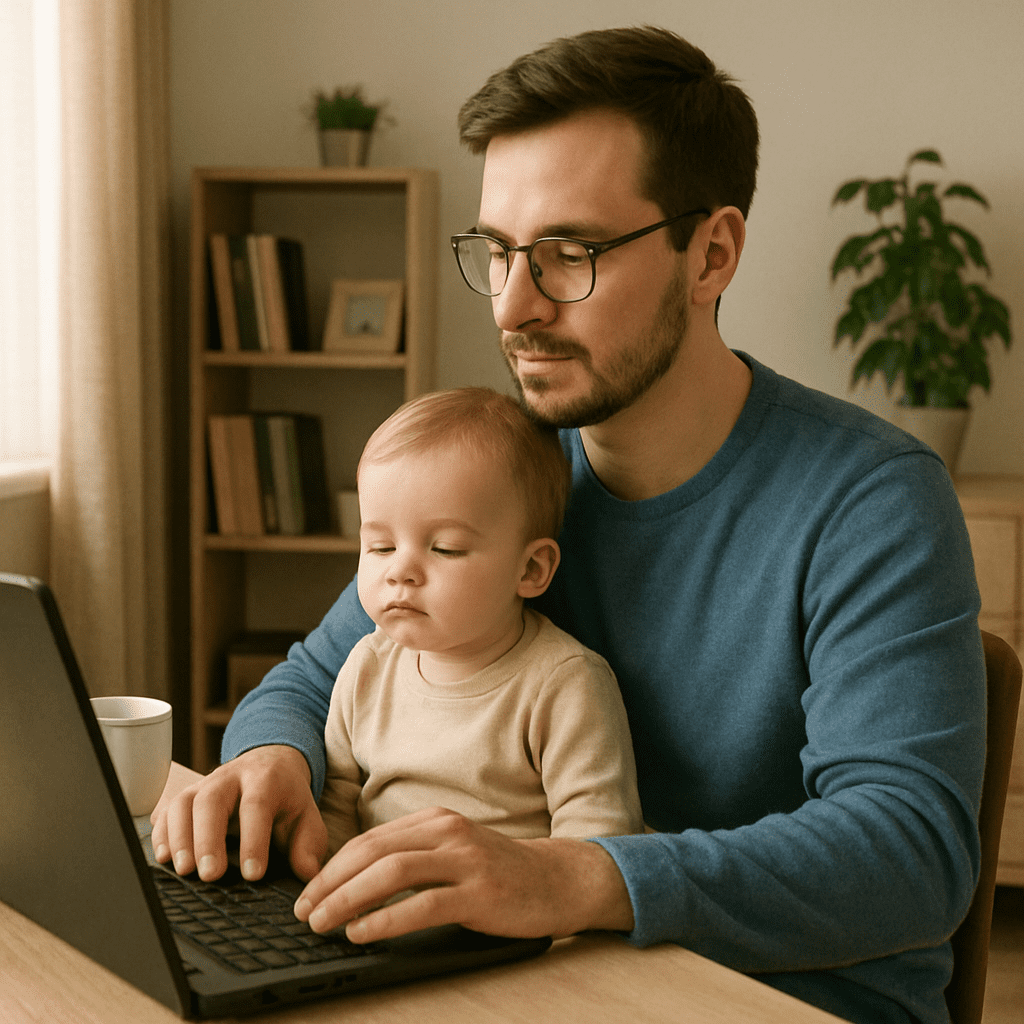
A powerful instrument to equalize satisfaction and enable fathers to form an even deeper bond is parental leave. The Impact of Parental Leave on Well-being especially when fathers have several months alone (meaning, without the mother's presence) to stay home with the child are enormous.
- Experience of Competence Fathers who take „solo parental leave“ build immense confidence in their caregiving abilities. They have to structure daily life themselves, manage pediatrician visits alone, and find their own ways to soothe a crying baby.
- Reducing the mental load on mothers If the father knows which closet the winter clothes are in and when the U-examination is scheduled, the mother no longer needs to delegate these things.
- Sustainable change: Studies show that couples where the man takes substantial parental leave also share household and family work more fairly years later. The likelihood of divorce decreases, which is an essential building block for the Paternity and Satisfaction is.
Ways out of the satisfaction trap: How we close the gap
That Fatherhood is more satisfying than motherhood, should not be a reason for us to condemn fathers for their happiness. On the contrary, the goal must be to raise the quality of life and satisfaction of mothers to the same level. It's not about taking away playtime from fathers, but about distributing the burden of duties and mental responsibility more fairly.
Here are practical, proven strategies for families to Role distribution and parental mental well-being to balance
1. Make the „mental load“ visible and divide it
The first step is to make invisible labor visible. Couples should sit down once a month and list all the „invisible“ tasks that need to be done.
- Tip: Use the principle of complete handover of responsibility. If the father takes on the topic of „pediatrician,“ he does so completely. He makes the appointment, notes it in the family calendar, goes with the child, asks for prescriptions, and picks up the medication at the pharmacy. The mother completely disengages from this.
2. Fair Play in „Play“ vs. „Care“
Consciously pay attention to how you spend time with the child.
- Tip: Fathers also have to step up when the child throws tantrums or the bedsheets need changing at three in the morning. At the same time, mothers should be consciously encouraged to let duties slide and simply lie on the floor with the child and build Lego. The laundry pile won't run away, but childhood will.
3. Maternal Perfectionism vs. Paternal Chill („Dismantling Maternal Gatekeeping“)
Sometimes mothers get in their own way. Because they have internalized societal expectations, they often correct the fathers. („Don't put the red shirt with the pink pants on her!“, „You secured the diaper too loosely!“). This demotivates fathers and leads them to withdraw from childcare.
- Tip for mothers: Let go. Your father's path may be different from yours, but it is not necessarily worse. A child is not harmed by mismatched sock combinations, but benefits immensely from an independent, self-assured father.
- Tip for dads: Don't be discouraged and confidently claim your space for parenting.
4. Changing societal discourses
We all need to stop celebrating fathers for doing the bare minimum and condemning mothers for trivial things. If we notice this double standard being applied within our circle of friends or family, we should lovingly but firmly point it out. A father who changes a diaper isn't „helping“ the mother. He is simply fulfilling his role as a parent.
Conclusion: The Vision of Equal Parental Happiness
The answer to the question, Why fatherhood makes people more satisfied than motherhood, is as multifaceted as family life itself. It is not based on biology, but on persistent societal structures, on the unequal distribution of stress-related tasks versus fun activities, on the overwhelming mental load of women, and on the stark disparity in societal expectations.
Happy fathers are a blessing to any family. Their often intuitive, playful approach, their calmness, and the special Father-child attachment, which they build are irreplaceable for the healthy development of a child. The Factors for high paternal life satisfaction – Autonomy, play, social recognition, and balance – should be the model for how both Family members allowed to experience their parents.
To close the „parenting happiness gap,“ we must become more active as a society and as individuals in our relationships. Mothers have a right to experience parenting as carefree and joyful as fathers do. And fathers have the right to be fully involved in caregiving and nurturing work without being belittled.
If we succeed in honestly and equally sharing the care work, the mental load, and the joyful moments of play, then in the end, it won't just be fatherhood or motherhood that brings happiness – but simply Parenting. And that is the greatest gain for tomorrow's generation.
