
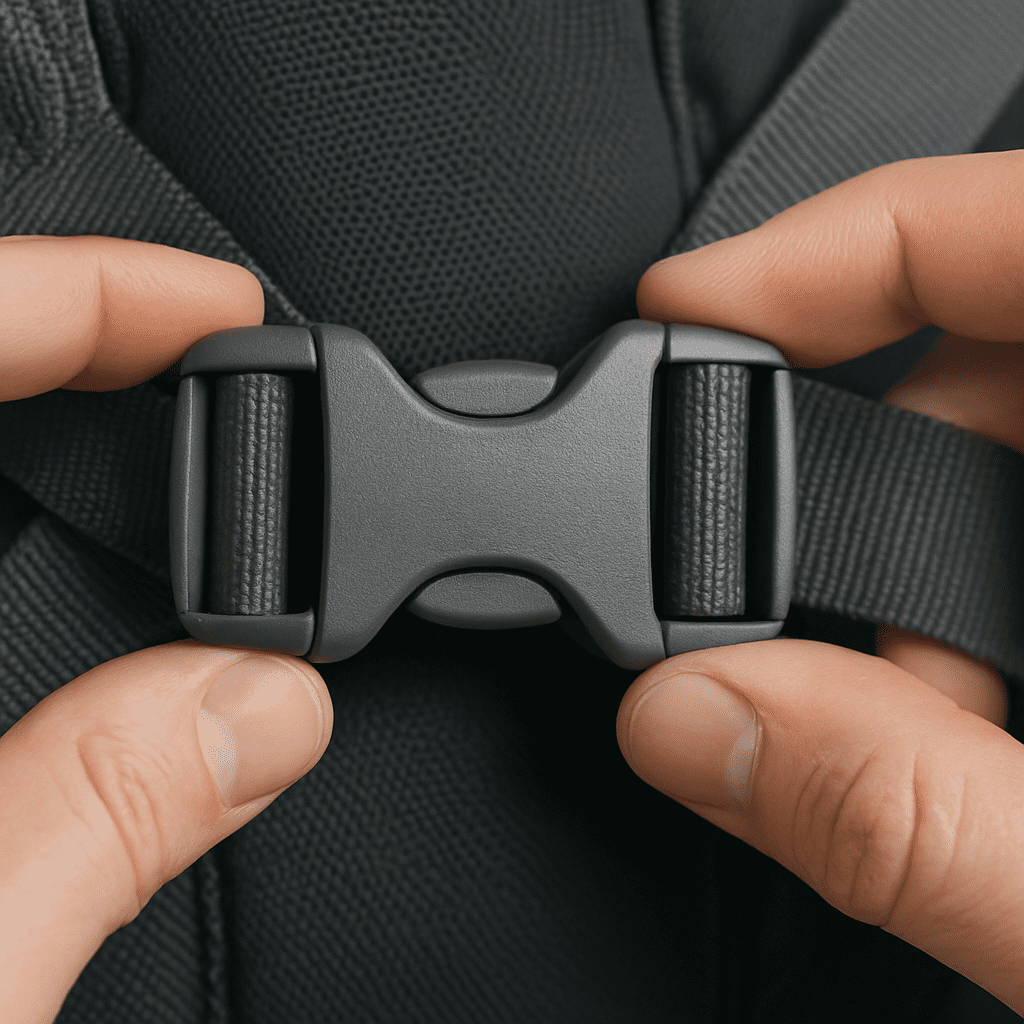
Viele Eltern gehen davon aus, dass ein Produkt im Ladenregal alle nötigen Sicherheitsprüfungen bestanden hat. Unabhängige Tests zeigen jedoch, dass einige verbreitete Modelle dabei versagen – sei es durch minderwertige Schnallen, schlechte Nähte oder belastete Stoffe.
Babys nuckeln an Schultergurten und haben eine dünne, durchlässige Haut. Chemikalien aus dem Stoff können so direkt aufgenommen werden. Dazu kommt die Frage der Ergonomie: Eine Trage sollte das Baby von Knie zu Knie stützen und die Hüften in einer gebeugten Position halten.
Welche Mängel Tests aufdecken: Schnallen, Nähte, Materialfehler
Labore simulieren beim Testen nicht nur das Gewicht eines ruhenden Kindes, sondern auch Bewegungsbelastung. Ein statisch gehaltenes Gewicht sagt wenig darüber aus, was bei einem plötzlichen Ruck passiert.
Eine hochwertige Schnalle rastet mit einem satten Klick ein. Klingt der Verschluss dumpf oder hohl, kann das auf Materialschwäche hinweisen. Beim sogenannten Gurtkriechen rutscht der Gurt unbemerkt durch die Schnalle, bis das Kind den Halt verliert.
Prüfen Sie Ihr Modell regelmäßig auf diese Warnsignale:
- Ausfransende Ränder an Schulter- oder Hüftgurten
- Dünnes, biegbares Plastik an den Hauptverschlüssen
- Lockere oder gerissene Fäden an tragenden Nähten
- Straps that slide through the closed buckle with a slight pull
Schadstoffe im Stoff: Ein Risiko, das man nicht sieht
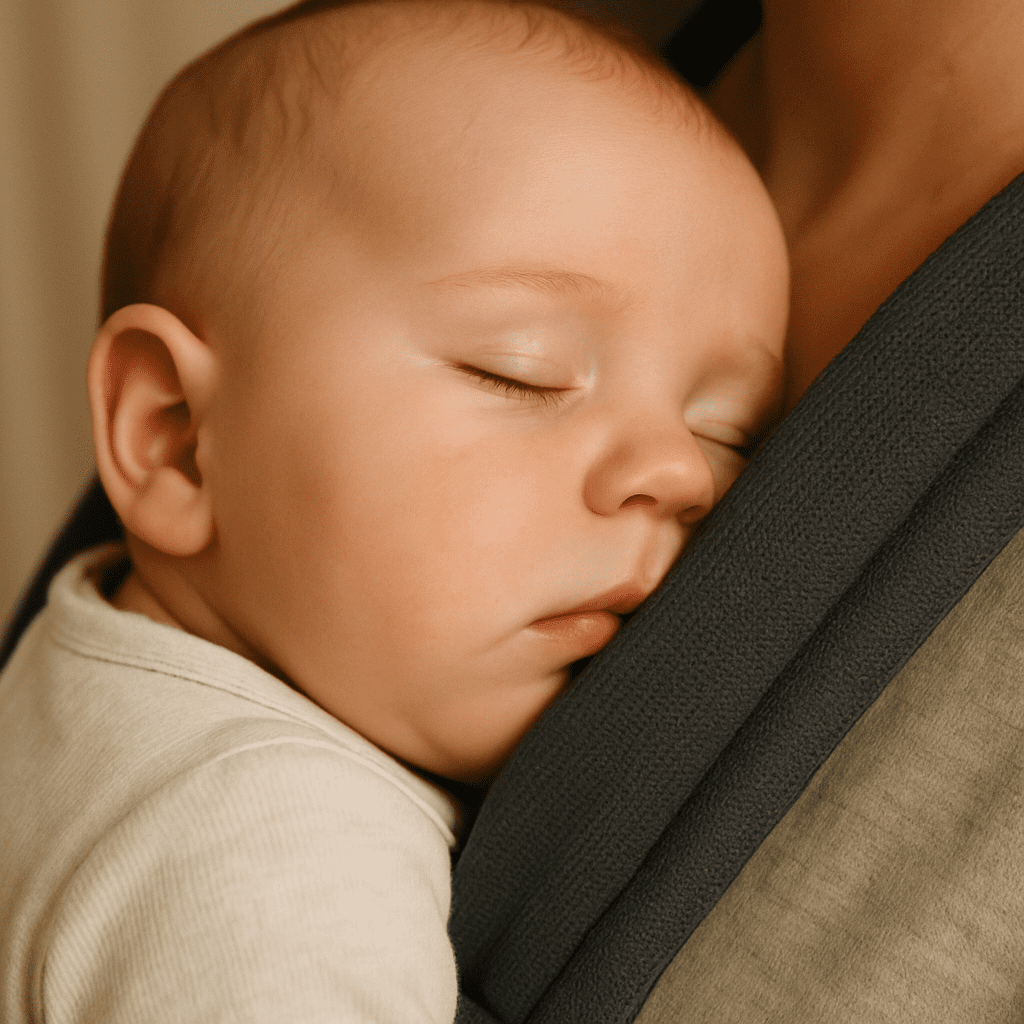
Babys legen ihr Gesicht oft direkt auf den Schultergurt oder nehmen den Stoff in den Mund. Bedenkliche Substanzen können so über Speichelkontakt oder die Haut aufgenommen werden.
Ein normaler Waschgang entfernt industrielle Färbemittel und chemische Veredelungen nicht zuverlässig – sie sind oft tief in die Fasern eingearbeitet. Achten Sie beim Kauf auf den Öko-Tex Standard 100 für Babytextilien (Produktklasse 1), der Stoffe auch bei intensivem Speichelkontakt prüft.
Hüftgesundheit: Die M-Position einfach erklärt
Werden Babys mit gerade herabhängenden Beinen getragen, kann das die Hüftentwicklung beeinträchtigen. Neugeborene kommen mit noch nicht ausgereiften Hüftgelenken zur Welt – die Gelenke bestehen in den ersten Monaten größtenteils aus formbarem Knorpel. Hängen die Beine ungestützt herab, kann das Eigengewicht die Oberschenkelknochen aus der Gelenkpfanne ziehen und langfristig zu einer Hüftdysplasie führen.
Eine ergonomische Trage stützt das Baby von Kniekehle zu Kniekehle, sodass das Gewicht gleichmäßig auf die Oberschenkel verteilt wird. Das entspricht der sogenannten M-Position: Die Knie liegen höher als der Po, Beine und Gesäß bilden von hinten betrachtet ein „M“.
Diese Haltung schützt nicht nur die Hüftgelenke, sondern unterstützt auch die Wirbelsäule. Säuglinge haben natürlicherweise einen leicht gerundeten Rücken – das „C“ – und sollten nicht in eine flache, gerade Haltung gedrückt werden.
Ob Ihre Trage diese Haltung fördert, lässt sich im Spiegel prüfen:
- Knee over hip Die Knie müssen deutlich höher liegen als das Gesäß.
- Vollständige Unterstützung: Der Stoffsteg reicht von Kniekehle zu Kniekehle und trägt die Oberschenkel vollflächig.
- Gentle rounded back Die Wirbelsäule zeigt eine C-Kurve; das Baby sackt nicht in sich zusammen.
Oft lässt sich die Haltung durch ein leichtes Ankippen des Beckens oder ein Verbreitern des Stoffstegs verbessern.
Sicherheitscheck: So prüfen Sie Ihre Trage zu Hause
Auch eine hochwertige Trage unterliegt Materialermüdung durch tägliche Belastung, UV-Licht und häufiges Waschen. Ein kleiner Riss in einer Schnalle oder eine aufgeriebene Naht kann dazu führen, dass die Trage unter Belastung nachgibt.
Kontrollieren Sie Ihre Trage regelmäßig, am besten einmal im Monat:
- Naht-Zugtest: Greifen Sie den Stoff auf beiden Seiten der Hauptnähte und ziehen Sie kräftig. Weiten sich die Nahtlöcher oder knacken Fäden, ist die Trage nicht mehr sicher.
- Schnallen-Test: Verschlüsse schließen, bis sie hörbar einrasten, dann ruckartig an beiden Gurtenden ziehen. Ein intakter Verschluss bleibt geschlossen.
- Gegenlicht-Kontrolle: Stoff gegen eine Lichtquelle halten. Dünne, rissgefährdete Stellen lassen mehr Licht durch als das übrige Material.
Auch ein stabiler Verschluss schützt nicht vor allen Risiken: Die freie Sauerstoffzufuhr muss ebenfalls gewährleistet sein.
Atemwege freihalten: Auf Kopfhaltung achten
Kleine Babys können ihren Kopf noch nicht selbstständig halten. Schlafen sie in der Trage ein, sacken sie leicht in sich zusammen. Als einfache Faustregel gilt die „Kopfkuss-Höhe“: Das Baby sitzt richtig, wenn Sie seinen Kopf ohne große Verrenkungen küssen können. Sitzt es zu tief, kann das Gesicht gefährlich auf die Brust sinken.
Ein sanft gerundeter Rücken hält die Wirbelsäule in einer natürlichen Position und stützt den Kopf. Drückt der Stoff den Rücken gerade, kippt der Kopf nach vorne und kann die weiche Luftröhre einengen.

To check for this dangerous kinking, a simple hand motion is enough: the two-finger rule. There should always be enough space between your baby's chin and their own chest to comfortably slide two fingers in between. If this gap is too small, air supply will be blocked, even if the mouth and nose are completely clear of fabric. Any sound guide explicitly points out this life-saving distance, as babies don't cry loudly when lacking oxygen but instead weaken quietly and unnoticed.
As you walk, if you notice your child slumping unhappily, you don't need to take the whole carrier off. Instead, reach from underneath into the backs of your baby's knees and gently tilt their pelvis towards you, so their knees are higher than their bottom again. This rolling motion straightens their back, gently tilts their head back onto your chest, and immediately restores crucial space under their chin.
Shop Safely: What Seals Like GS and Oeko-Tex Really Mean
When we buy a new baby carrier, we mostly blindly trust that it has undergone strict controls. But a dangerous misconception lurks here: many manufacturers simply use what is called a self-declaration. This means the brand simply claims its product is safe without an independent laboratory ever having checked it. Especially expensive premium brands often rely on fancy marketing instead of genuine Certified safety seals for baby products. Real safety, however, is only achieved through third-party verification – meaning when a neutral institute like TÜV tests the plastic buckles under strong tension and examines the material for hidden toxins.
Since babies like to explore the shoulder straps with their mouths and have very thin skin, harmful chemicals from textiles quickly enter the little organism directly. To truly Top-rated child carriers free of harmful substances To find them, a general label like „tested for harmful substances“ is not enough. When buying, specifically look for these four reliable certifications:
- GS Mark (Tested Safety): Guaranteed that an independent institution has tested the mechanical stability – such as tear-resistant straps and unbreakable buckles.
- Oeko-Tex Standard 100 Baby Textiles (Product Class 1): The strictest level of this seal. It ensures that the fabric is completely non-toxic, even if the baby sucks on it for hours.
- DIN EN 13209-2: The European safety standard specifically for soft baby carriers, which sets strict requirements for non-toxic materials and suffocation risks.
- CEN/TR 16512: A guide to baby wraps and mei tais, ensuring the fabric construction does not dangerously give way under prolonged stress.
With this knowledge, you can avoid expensive marketing traps and focus on what really matters: independent evidence. A seal guarantees you that the product was safe when it left the factory. However, even with used models, the best initial certification does not protect against later material fatigue.
Buying second-hand: When a used baby carrier becomes a safety risk
The thought of a well-worn, inexpensive baby carrier found online is tempting. But many parents rightly ask themselves: are used baby carriers still safe? The safety comparison clearly shows the answer. While a tightly woven cotton wrap often remains stable for years, elastic fabrics have a dangerous „point of no return.“ Try the test and pull the fabric apart forcefully: if it doesn't immediately snap back into its tight original shape, the invisible elastane threads inside have broken. Your baby will dangerously collapse within such a fabric, which strains the child's spine and, in the worst case, hinders breathing.
An even greater risk is hidden in the unassuming plastic buckles of older models. Plastics suffer from a so-called embrittlement when exposed to sunlight and strong temperature fluctuations for years. The material dries out internally and loses its life-saving flexibility. During a jerky movement, such a buckle can then break as easily as a dry biscuit. Therefore, always check the manufacturing date on the sewn-in label before use. If the carrier is older than five years, you should no longer take the risk of a sudden break.
However, sometimes the danger is not due to normal wear and tear, but to a hidden manufacturing defect. Before you put on a foreign model, you should check the brand name in official recall databases. For example, the European rapid alert system RAPEX lists products that have been withdrawn from the market due to toxic paints or tearing straps. A quick online search will protect your child from known sources of danger.
Your action plan for maximum confidence while wearing
You no longer have to blindly trust that every product on the shelf is automatically safe. The insights from current child carrier tests give you the knowledge needed to transform from a trusting buyer to a vigilant protector. You now know how to look beyond marketing promises to identify hidden chemical hazards and structural weaknesses before a buckle breaks or a seam tears.
To turn this ergonomic and structural knowledge into a life-saving habit, make this 5-point checklist your routine before every walk:
- The train test: Tighten all plastic buckles and straps securely before placing your baby in it to ensure nothing pops open under pressure.
- The Seam Control Quickly check the load-bearing seams where the shoulder straps connect to the body for fraying or loose threads.
- The M-Position Check: Make sure your baby's knees are slightly higher than their bottom and fully supported from knee to knee.
- The C-Curve Look: Ensure your baby's back rests in a natural, gentle curve and isn't rigidly pressed against you.
- Clear airway: Ensure that the fabric does not cover your baby's face and that their chin is not resting on their chest.
Alarming headlines shouldn't take away from the joy of wearing. Instead, this awareness empowers you to choose wisely and use your gear correctly. By taking just thirty seconds each day for these checks, you replace hidden worries with real confidence – ensuring your little one is completely secure while you enjoy truly hands-free peace of mind.
