
Viele Frauen fragen sich, ob sie die Einnistung spüren können. Dieser Artikel erklärt, was dabei im Körper passiert, wie sich mögliche Zeichen äußern und wann ein Schwangerschaftstest sinnvoll ist.

What happens in the body? The biology of nidation
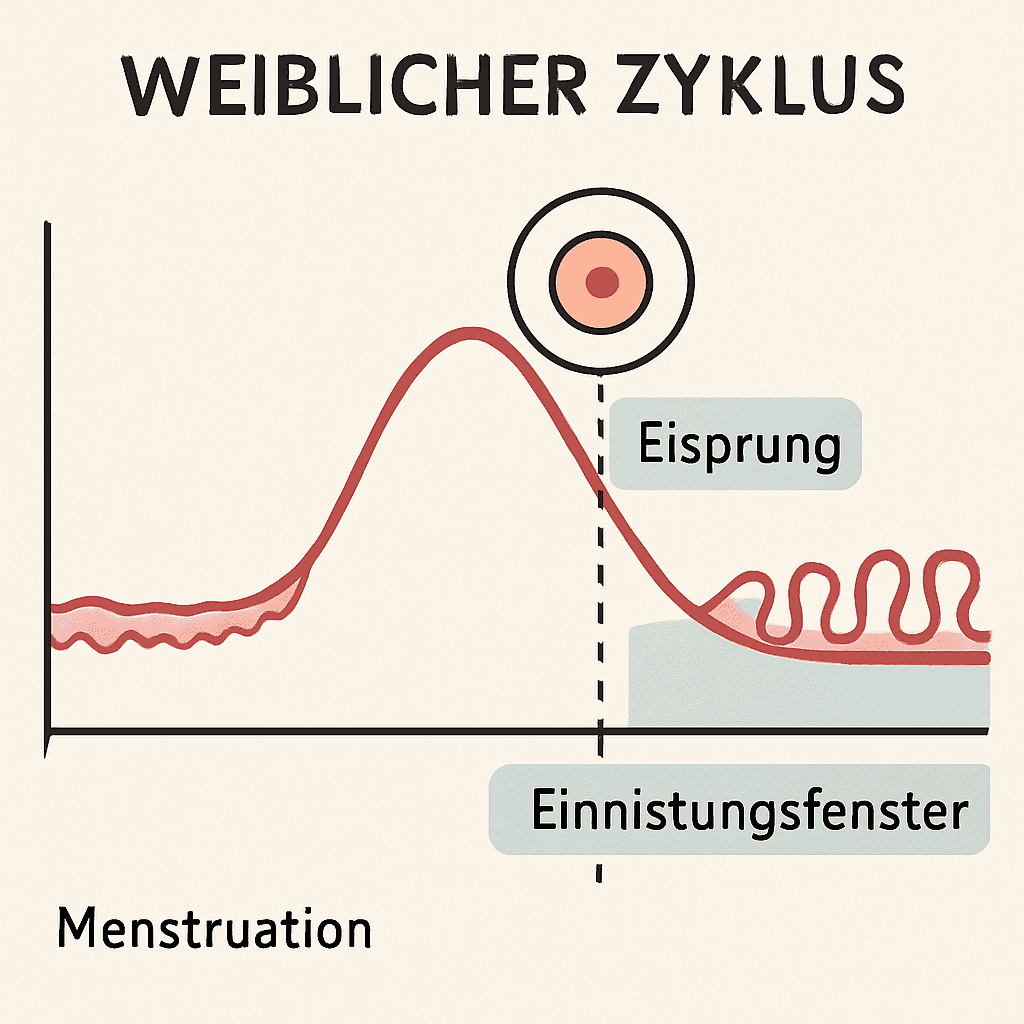
Nach dem Eisprung und der Befruchtung im Eileiter teilt sich die Eizelle und wandert in die Gebärmutter. Nach etwa fünf bis sechs Tagen hat sie sich zu einer Blastozyste entwickelt und nistet sich in die Gebärmutterschleimhaut ein. Gleichzeitig produziert der Körper mehr Progesteron, um die Schleimhaut zu erhalten und die Menstruation zu verhindern. Bei manchen Frauen löst dieser Vorgang leichte körperliche Reaktionen aus.
Can you really feel implantation?
Medizinisch gesehen ist der Vorgang mikroskopisch klein und sollte keinen starken Schmerz verursachen. Manche Frauen berichten dennoch von leichten Kontraktionen oder einer Reizung der Schleimhaut in dieser Zyklusphase – viele spüren gar nichts.
Timing: When does implantation occur?
Die Einnistung findet in der Regel zwischen dem 6. und 10. Tag nach dem Eisprung statt. Wer den Eisprungstag kennt – etwa durch Ovulationstests oder Temperaturmessung –, kann das ungefähre Zeitfenster selbst berechnen. Bei einem Eisprung am 14. Zyklustag liegt es grob zwischen Zyklustag 20 und 24.
Note: Online-Rechner können helfen, das Fenster anhand der letzten Periode und der Zykluslänge zu schätzen.
Location and Feeling: How is implantation noticeable?
Beim Einnistungsschmerz handelt es sich meist nicht um starke Schmerzen, sondern um ein diffuses Gefühl im Unterleib.
Where exactly do you feel it?
Das Ziehen liegt meist mittig im Bereich der Gebärmutter, manchmal direkt hinter dem Schambein. Es ist meist lokal begrenzt und reicht von einem kurzen Piksen bis zu einem leichten dumpfen Ziehen über ein bis zwei Tage.
Implantation pain can feel like a mild cramping or a pulling sensation in your lower abdomen. It's usually short-lived, lasting a few hours to a couple of days. Some women don't feel it at all.
Das Empfinden ist unterschiedlich. Frauen beschreiben es zum Beispiel als:
- Leichtes Zwicken oder Kribbeln: Like small needle pricks in the uterine area.
- Einseitiges Stechen: Obwohl die Gebärmutter mittig liegt, strahlt das Gefühl manchmal leicht zu einer Seite aus.
- Pressure sensation A slight feeling of heaviness in the pelvic area.
Viele beschreiben es als schwächeres Pendant zu Periodenziehen – ein leichtes Krampfen, das zu einem Zeitpunkt auftritt, an dem die Periode noch nicht fällig wäre.
Abgrenzung: Einnistung oder etwas anderes?
In der zweiten Zyklushälfte lassen sich Körperzeichen schwer eindeutig zuordnen.
Difference between Mittelschmerz and implantation
Mittelschmerz occurs before or during des Eisprungs auf und wird oft einseitig in der Nähe der Eierstöcke gespürt. Der Einnistungsschmerz setzt erst etwa eine Woche after dem Eisprung ein und ist meist mittig in der Gebärmutter lokalisiert.
Einnistungsschmerz oder PMS?
Das ist nicht leicht zu unterscheiden, da Progesteron – das nach dem Eisprung gebildet wird – sowohl PMS als auch frühe Schwangerschaftssymptome auslösen kann.
- PMS cramp Often builds up slowly and gets stronger as the period approaches.
- Implantation pain Tritt meist isoliert einige Tage nach dem Eisprung auf und verschwindet oft wieder, bevor die Periode einsetzen würde.
Ob das Ziehen ein frühes Schwangerschaftszeichen oder PMS war, lässt sich oft erst im Rückblick sagen.

Implantation bleeding: Another sign
Besides the physical sensation, there is another visible sign: implantation bleeding. When the blastocyst invades the richly vascularized uterine lining, tiny blood vessels can be damaged. This can lead to light spotting.
If you Spottingimplantation bleeding vs. period want, pay attention to the following features:
- Color: Implantation bleeding is usually light pink or brownish (old blood). Menstruation typically starts with fresh, bright red blood.
- Strength Implantation bleeding is extremely light. Often, a small panty liner is sufficient, or only a little blood is visible on the toilet paper. The period becomes significantly heavier as it progresses.
- Duration Implantation bleeding usually lasts only a few hours to a maximum of two days.
- Timepoint It occurs before the actual due date of the period.
Note: Not experiencing implantation bleeding is completely normal! Only about 20 to 30 percent of all pregnant women notice this light bleeding at all.
Other accompanying symptoms: Is it finally time?
Implantation pain rarely comes alone. The body immediately begins to switch to „pregnancy“ after nidation. Other phenomena that are considered Early signs of successful fertilization apply, count
- Breast Changes: A feeling of fullness, tenderness, or unusual sensitivity of the nipples due to the rapid rise in hormones.
- Fatigue A leaden, sudden exhaustion that can be explained by rising progesterone levels.
- Mild nausea Even though typical morning sickness usually starts later, some women react extremely early to hormonal fluctuations.
- Frequent urination The increased blood flow in the pelvic area stimulates kidney function.
- Basal body temperature Women who track their temperature often notice that the curve stays elevated after implantation or even gets a small „boost“ upwards (three-phase curve). Occasionally, there is also a brief drop in temperature on the day of implantation (implantation dip).
The pregnancy test: When does it bring certainty?
Even if you are sure you felt implantation pain, the only medical proof of pregnancy is the hormone hCG (human chorionic gonadotropin). This hormone is only produced after produced by the body after successful implantation.
The burning question therefore is: When is hCG detectable after implantation??
- In the blood A blood test at the gynecologist can often detect hCG 2 to 3 days after implantation (around 9 or 10 days past ovulation).
- In urine (early test): Highly sensitive pregnancy tests (sensitivity 10 mIU/ml) from the pharmacy or drugstore usually detect pregnancy about 3 to 5 days after implantation. This is often 2 to 4 days before the expected period is due.
- Secure urine test The most reliable tests are from the day of your period's due date (usually 14 days past ovulation). At this point, the hCG concentration in your urine is high enough to almost rule out false-negative results.
It requires a lot of patience, but whoever tests too early risks disappointment, even though a pregnancy might actually be present because the hormone just wasn't concentrated enough in the urine yet.
Conclusion: Listen to your body, but stay calm
The journey to your desired child is exciting and emotional. The question, „What does implantation pain feel like and when does it occur?“ occupies almost every woman who hopes to be pregnant soon. Whether as a slight pulling, one-sided stinging, or cramping similar to menstruation – the symptoms of implantation are diverse and extremely subtle.
It is important to emphasize: If you don't feel anything, it doesn't mean it didn't work! The overwhelming majority of women feel absolutely nothing during implantation and still hold a positive pregnancy test a few days later.
Observe your body with love, note any irregularities, but try not to stress too much in the second half of your cycle. Allow yourself rest, do things that bring you joy, and give your body the time it needs to quietly bring about the little miracle of an early pregnancy.
