
Wenn Sie sich in Elternteil B wiedererkennen – der ersten Anlaufstelle für alles: emotionale Krisen, Alltagsorganisation, spontane Fragen – leiden Sie möglicherweise unter dem Default Parent Syndrome. Dieses Ungleichgewicht belastet die betroffene Person, die Partnerschaft und die Familie.

What is Default Parent Syndrome?
Das Default Parent Syndrome beschreibt den Zustand, in dem ein Elternteil – meistens, aber nicht immer die Mutter – die Hauptverantwortung für Kinderbetreuung und Familienorganisation trägt. Selbst wenn beide in Vollzeit arbeiten, bleibt Planung und emotionale Fürsorge oft an einer Person hängen.
Ein großer Teil dieser Belastung ist unsichtbare Arbeit: Sie fällt niemandem auf, solange sie erledigt wird. Rechtzeitig ans Geburtstagsgeschenk denken, die nächste Kleidergröße im Blick haben, die Kita-Gruppe im Auge behalten – all das kostet Zeit und Energie, ohne dass es jemand sieht. Wenn diese kognitive Last nur bei einer Person liegt, gerät das System unter Druck.
Warning Signs: When the Invisible Burden Becomes Too Great
Es ist ein schleichender Prozess. Achten Sie auf diese Anzeichen:
- Chronic fatigue Sie fühlen sich bereits morgens müde.
- Irritability Small things throw you off balance.
- Feeling of isolation Sie fühlen sich mit der Verantwortung allein gelassen, auch wenn Ihr Partner anwesend ist.
- Loss of one's identity Sie funktionieren nur noch im Eltern-Modus, ohne Zeit für eigene Bedürfnisse.
Wie entsteht die Dynamik des „Standard-Elternteils“?
Warum rutschen gleichberechtigte Paare in diese Falle? Die Gründe sind vielfältig.
Social conditioning
Trotz aller Fortschritte spielen traditionelle Rollenbilder weiterhin eine Rolle. Frauen wird oft suggeriert, sie seien von Natur aus besser im Organisieren oder Pflegen. Organisationstalent ist jedoch keine Frage der Genetik, sondern der Gewohnheit.
2. The phenomenon of the favored parent
Kinder neigen phasenweise dazu, ein Elternteil stark zu bevorzugen. Wenn der Default Parent ohnehin alles regelt, wird er zur verlässlichen Basis – das Kind fordert ihn immer häufiger ein, und die Dynamik verstärkt sich.
3. The Perfectionism Trap
Ein häufiger Grund, warum sich das Muster nicht ändert, ist Gatekeeping: Der Default Parent möchte Aufgaben abgeben, kritisiert den Partner aber, wenn er sie anders ausführt. Wenn der Partner für die falsche Kleidung kritisiert wird, zieht er sich zurück. Gleichberechtigung bedeutet auch, Kontrolle abzugeben und andere Wege zu akzeptieren.

Eine Zerreißprobe für die Beziehung
Wenn ein Partner dauerhaft die Managementrolle übernimmt, schwindet die Augenhöhe. Es entsteht Groll: Der Default Parent fühlt sich ausgenutzt, der andere bevormundet oder nutzlos. Die Beziehung leidet, wenn man den Partner eher als zusätzliche Aufgabe wahrnimmt als als Gleichgestellten.
The Way Out of the Trap: Rebuilding the System
Es reicht nicht, wenn der zweite Elternteil gelegentlich fragt: „Wie kann ich helfen?“ Diese Frage delegiert die Koordination direkt wieder an den Default Parent. Gefragt ist echte Mitverantwortung.
Strategy 1: Take on responsibility instead of tasks
Eine Aufgabe ist erst dann wirklich abgegeben, wenn der Partner sie von der Planung bis zur Ausführung komplett übernimmt – so lautet die Kernidee der Fair Play-Methode von Eve Rodsky.
Example Children's Birthday Party:
- Hilfe-Modus: Der Partner bläst die Luftballons auf, die der Default Parent gekauft hat – nachdem er Einladungen verschickt und den Kuchen gebacken hat.
- Fair Play-Modus: Der Partner ist dieses Jahr für den Kindergeburtstag verantwortlich: Motto, Einladungen, Einkauf, Feier. Der Default Parent ist an diesem Tag nur Gast.
Strategie 2: Aufgabenbereiche aufteilen
Erstellen Sie eine Liste aller anfallenden Aufgaben – von der Wäsche bis zum Arzttermin. Verteilen Sie keine einzelnen Handgriffe, sondern ganze Bereiche. Wenn Elternteil B für die morgendliche Schulvorbereitung zuständig ist, muss sich Elternteil A darum nicht mehr kümmern.
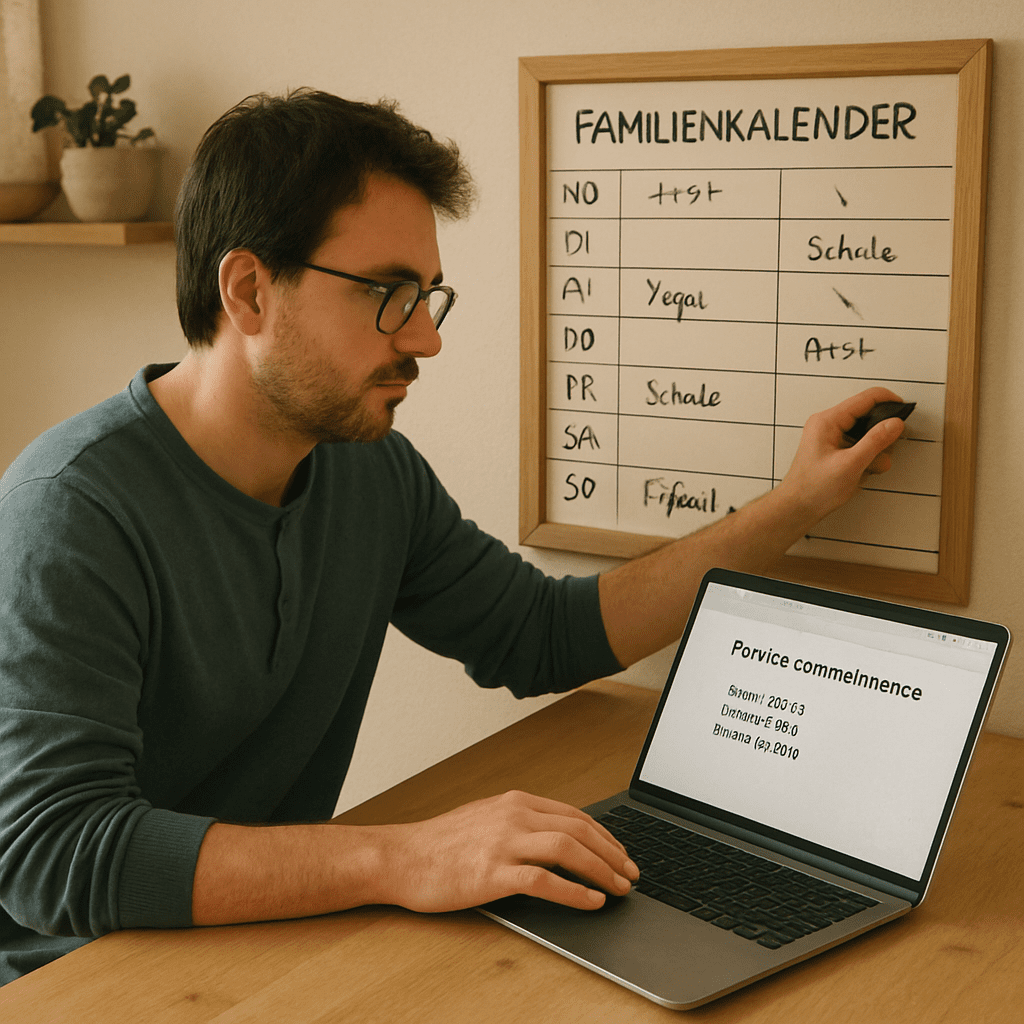
Strategy 3: Actively involve the second parent
For the partner who has previously been more in the background, it's often not so easy to suddenly step into responsibility. Here are some Secondary parent involvement tips:
- Act proactively: Don't wait for instructions. Scan the room. Is the trash can full? Take it out. Are diapers running low? Buy new ones.
- Establishing Your Own Routines Find your own ways to get the child to bed or comfort them. It doesn't have to go the way it does with the default parent.
- Gain information superiority: Sign up for the school and daycare email lists. Save the pediatrician's number in your cell phone.
Strategy 4: Setting Boundaries - For Yourself and Others
A massive step out of Default Parent Syndrome is setting boundaries with children and spouse. Children know exactly who will give them an answer faster. If you're working or taking a break and your child comes to you with a question that the other parent can answer just as well, kindly but firmly redirect them: „Dad is in charge of dinner today, please ask him.“
Just as important are boundaries with your partner. When the question comes up, „Where are the wet wipes?“ the answer isn't, „In the second drawer from the top left,“ but rather, „I put them in the usual spot, you'd best look for yourself.“
Growing together through better communication
Change doesn't happen overnight. There will be conflict, setbacks, and frustration. To navigate this phase, targeted Communication exercises for overwhelmed parents essential.
- The weekly check-in: Meet for 20 minutes once a week (e.g., Sunday evenings). Objectively and without accusations, discuss what's coming up in the week ahead. Who will take the child to sports practice? Who will do the big grocery shop?
- „I-messages“ When you talk about feeling overwhelmed, avoid sentences like, „You never...“ Instead, say: „I'm feeling really overwhelmed with planning the childcare right now. I need you to take over this part completely.“
- Expressing appreciation Don't forget to thank each other for the invisible work. A simple „Thanks for remembering parent-teacher night today“ works wonders for the relationship tapestry.
Conclusion: Escape from the endless loop
Default Parent Syndrome is not a personal failure, but the result of outdated structures, societal expectations, and entrenched habits. But the most important thing is: this dynamic can be broken.
It takes courage for the default parent to let go of control (and with it, a part of their identity as the all-knowing head of the family). And it takes commitment from the partner to proactively step up to responsibility and visibly share in the invisible work.
When we start to understand family work as a real team project, everyone wins. Children experience two equally present and competent parents, the mental load is distributed evenly, and more lightness and equality return to the partnership. Start today with the first small step – delegate one task completely. And then: Let go.
