Do you remember the distinctive scent of damp earth after a warm summer rain? When small hands dig deep into the cool mud, far more than just dirty clothes are created. A simple balcony box or a garden bed immediately transforms into a giant adventure playground that awakens all the senses.
Many families are familiar with the exhausting daily struggle over screen time. Instead of endless arguments, gardening with children offers a vibrant solution. According to studies on nature education, digging in the earth is a real developmental tool: it trains fine motor skills, teaches patience, and strengthens the inner protective shield against stress.
You definitely don't need a green thumb to get started today. For the adventure of discovering nature with children, a single pot with fast-growing radish seeds is often enough. Discover seven good reasons here why planting together shapes resilient children.

Why Earth Under Your Fingernails Strengthens Motor Skills and the Immune System
Every child loves playing in the mud. What often appears to us as bothersome dirt is actually an invisible training ground for a healthy immune system. This „friendly earth“ acts like a natural shield for the body, which builds up and sustainably strengthens children's defenses through harmless microbes.
Furthermore, gardening promotes motor development – toddlers playfully turn the garden bed into a motor skills playground. As soon as they use child-friendly garden tools or dig in the soil with their bare hands, amazing things happen:
- Sow Grasping tiny seeds trains the precise pincer grip.
- Pour Balancing a jug trains hand-eye coordination.
- Waste Targeted weeding greatly strengthens hand muscles.
So, dirty fingernails are the best proof of a healthy, all-around beneficial afternoon.
From the garden to the plate: How radishes end picky eating
Daily arguments at the dinner table about disliked greens often fray parents' nerves. However, something magical happens when gardening with children: they experience the direct connection between nutrition and their own cultivation in a completely unadulterated way. The carrot is suddenly no longer a bland supermarket product, but a self-created treasure that is proudly and voluntarily tasted.
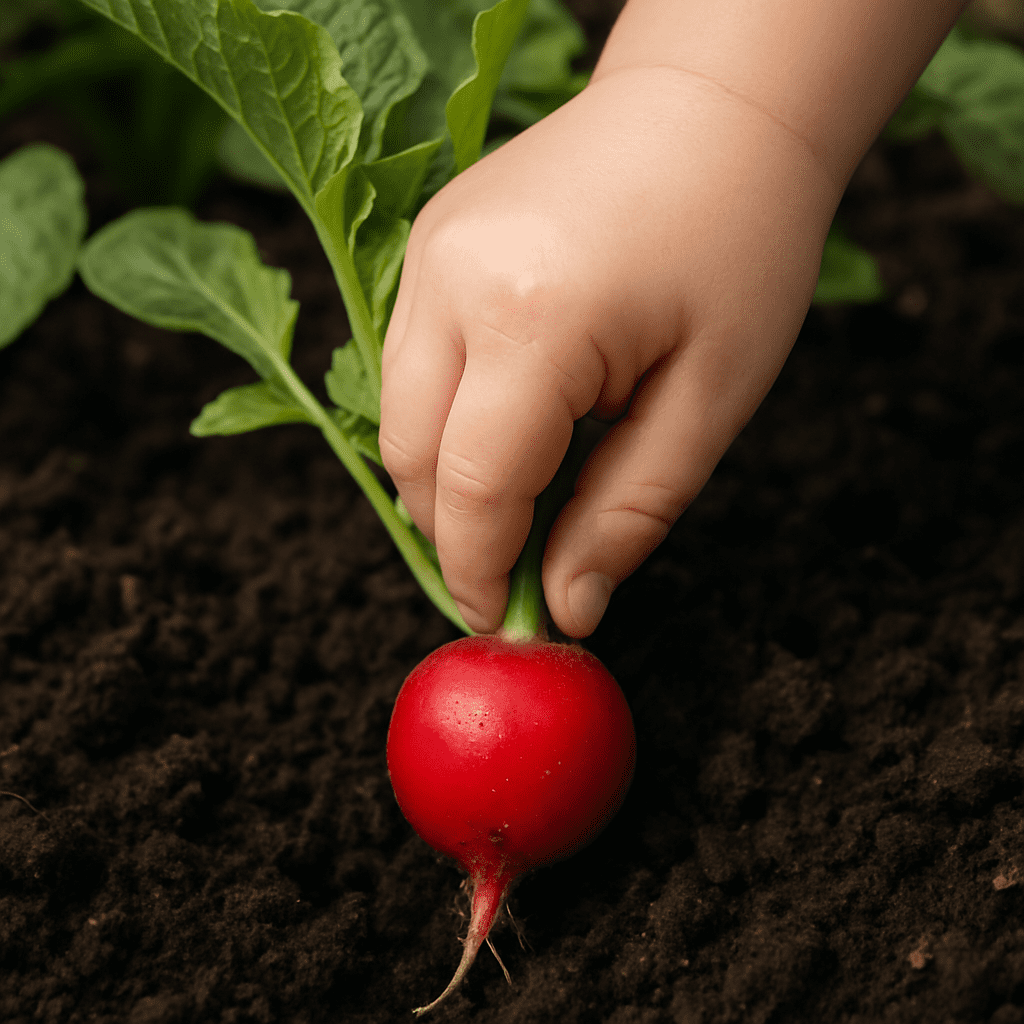
For those wondering which vegetables grow fastest for children, bright red radishes offer the perfect answer. They germinate in the balcony box after just a few days and immediately reward impatient young gardeners. Leaf lettuce also guarantees quick successes that will make even the biggest veggie-hater curious about the first bite.
This personal pride overcomes childish skepticism towards healthy food almost effortlessly. However, until the colorful harvest finally lands on the plate, the plants require reliable care. This naturally teaches children a valuable lesson about responsibility.

The ‚Pet Parallel‘: Learning Responsibility Without Buying a Dog
The desire for a pet is often enormous in children, but caring for a plant works surprisingly similarly. It's a living organism that wilts its leaves if it doesn't get daily attention. Through this immediately noticeable dependence, children can naturally learn empathy and experience everyday nature education in their own home garden or on the balcony.
Parents who want to strengthen a sense of responsibility through their own children's garden beds should ideally tailor the small duties to the children's age:
- 3 years Distribute the water with a light mini watering can.
- 5 years Press large seeds into the soil and pull obvious weeds.
- 8 years Design and care for your own plant pots completely independently.
Even if a seedling withers despite all efforts, this setback is also incredibly valuable. Instead of sadly giving up, the young gardeners practice calm observation for the next attempt – and in doing so, incidentally train a focused power of observation that creates a wonderful balance to the fast-paced digital world.
Digital Detox in Nature: How Nature Rescues Attention Spans
A swipe across the tablet provides instant entertainment, but this quick click doesn't work in nature. When a sunflower seed rests in the moist earth, seemingly nothing happens for days. This enormous contrast to the digital overload wonderfully slows down everyday family life.
Because biological growth cannot be artificially accelerated, young gardeners inevitably have to practice patience. In this way, patience and perseverance can be learned naturally through plant care. Each newly discovered leaf becomes a real, tangible reward that gently strengthens children's focus and grounds overstimulated senses.
Lively nature education noticeably helps to permanently establish this calmer rhythm. At the same time, it promotes sustainable awareness in children, as they learn to appreciate the slow process of life.
Safety First: Recognizing Poisonous Plants and Protecting Little Hands
As soon as little explorers rush outside, a pretty leaf or a berry quickly finds its way towards their mouth. To ensure basic Garden Safety ensuring this without constantly issuing prohibitions, a quick initial check of your greens helps. It's incredibly reassuring when parents Identifying and avoiding poisonous plants in the garden can, which includes these five common plants in particular:
- Golden rain
- Yew
- Lily of the valley
- Fingerhut
- Oleander
In addition to the natural environment, the right equipment ensures carefree digging fun. Child-friendly garden tools for little hands should be made of sturdy metal with wooden handles, as breaking plastic can quickly lead to injuries. With real, easy-to-grip tools, little ones feel taken seriously and work much more focused. Once this secure foundation is established, the shared adventure in their own children's garden bed can begin immediately.
Step-by-step guide to your first children's garden bed
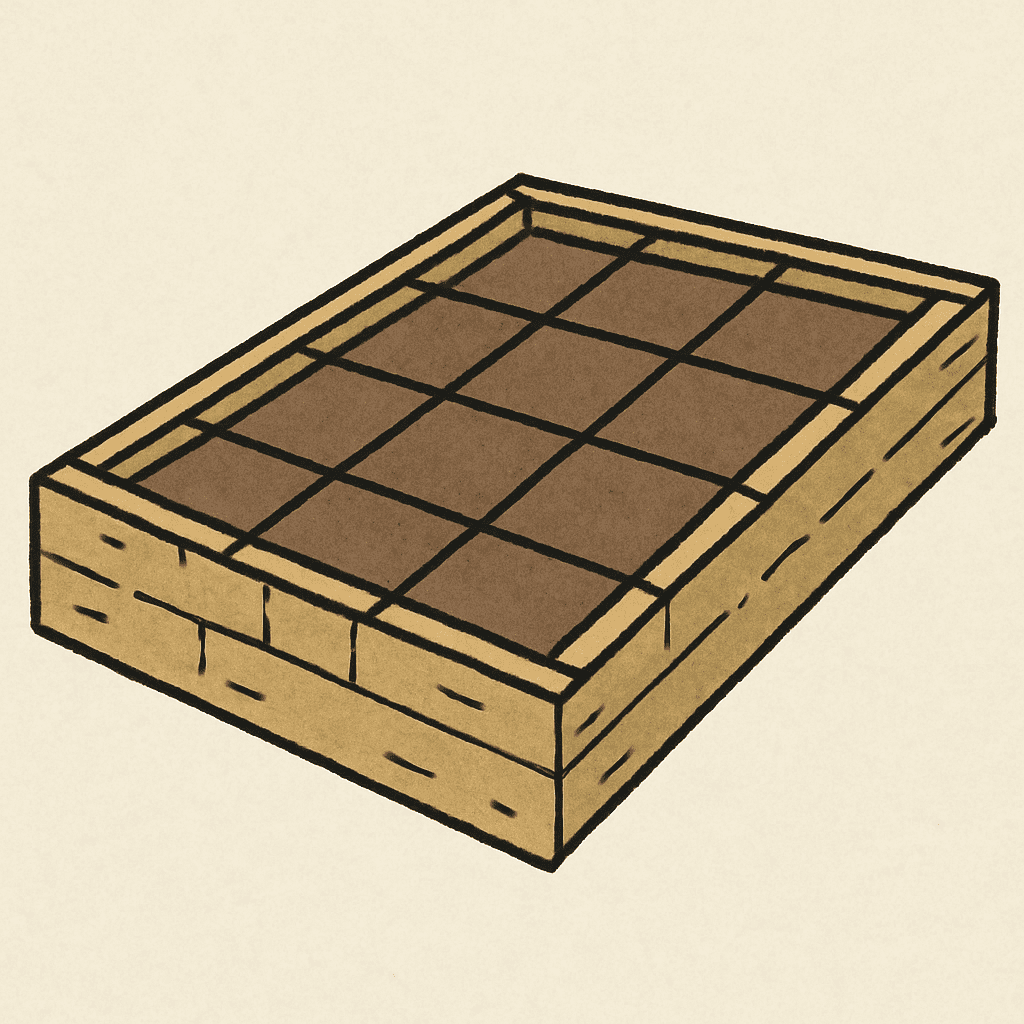
Finding the perfect starting point doesn't require a huge yard. Whether you Vegetable Garden vs. Raised Bed for Children consider or use a simple balcony planter: to Step-by-step guide to creating a children's garden bed Just a sunny square meter is enough to be able to. A raised bed cleverly protects the delicate plants from running feet.
Nothing motivates young sprouts more than a creative „pizza garden.“ When little hands plant tomatoes, oregano, and basil in the earth, the toppings for the upcoming dinner grow right before their eyes.
Your basic shopping list for this first project:
- High-quality, peat-free potting soil
- Robust tomato seedlings
- A watering can with a small rose
The actual planting then follows a simple rule of three: dig a hole, insert the plant, and water thoroughly. Simple flowers for first-time sowing, like luminous marigolds, complete the bed and ensure quick successes. Your path to family happiness in the garden will be just as relaxed.

Your path to family happiness in the garden
Where once only dirty hands or extra work were feared, you now see a wonderful tool for fostering empathy and patience. Digging in the earth together is not an annoying chore, but pure relationship work.
Start this weekend completely relaxed with a single project: a small flower pot on the windowsill and a few fast-growing radish seeds are enough to experience real nature. This is not about flawless appearance or large yields, but about wonderfully creative chaos and your shared amazement.
On your next afternoon outdoors, always remember this perspective: you're not just growing plants. With every tiny seed a little hand proudly presses into the earth, a happy, confident child is growing too.